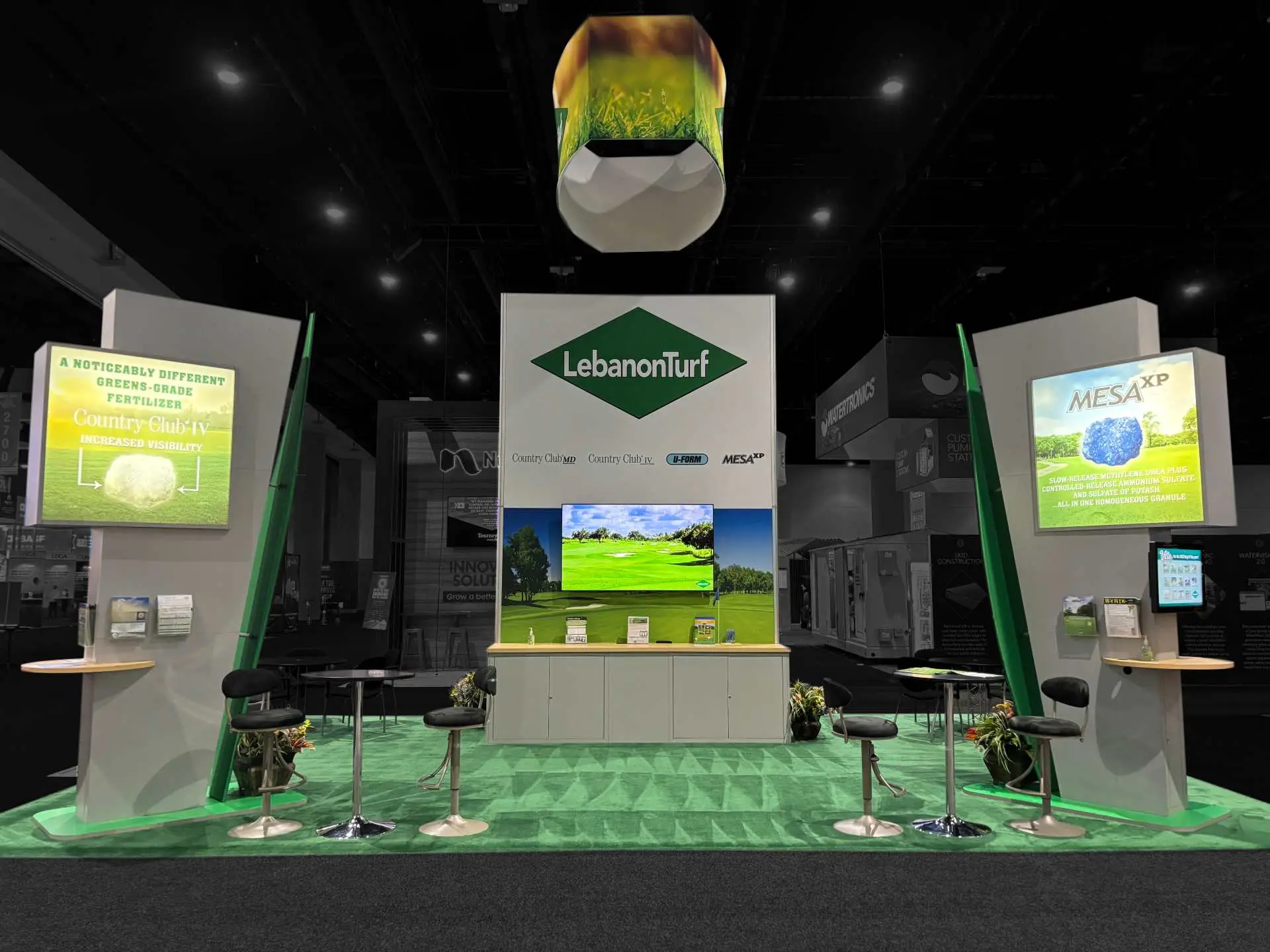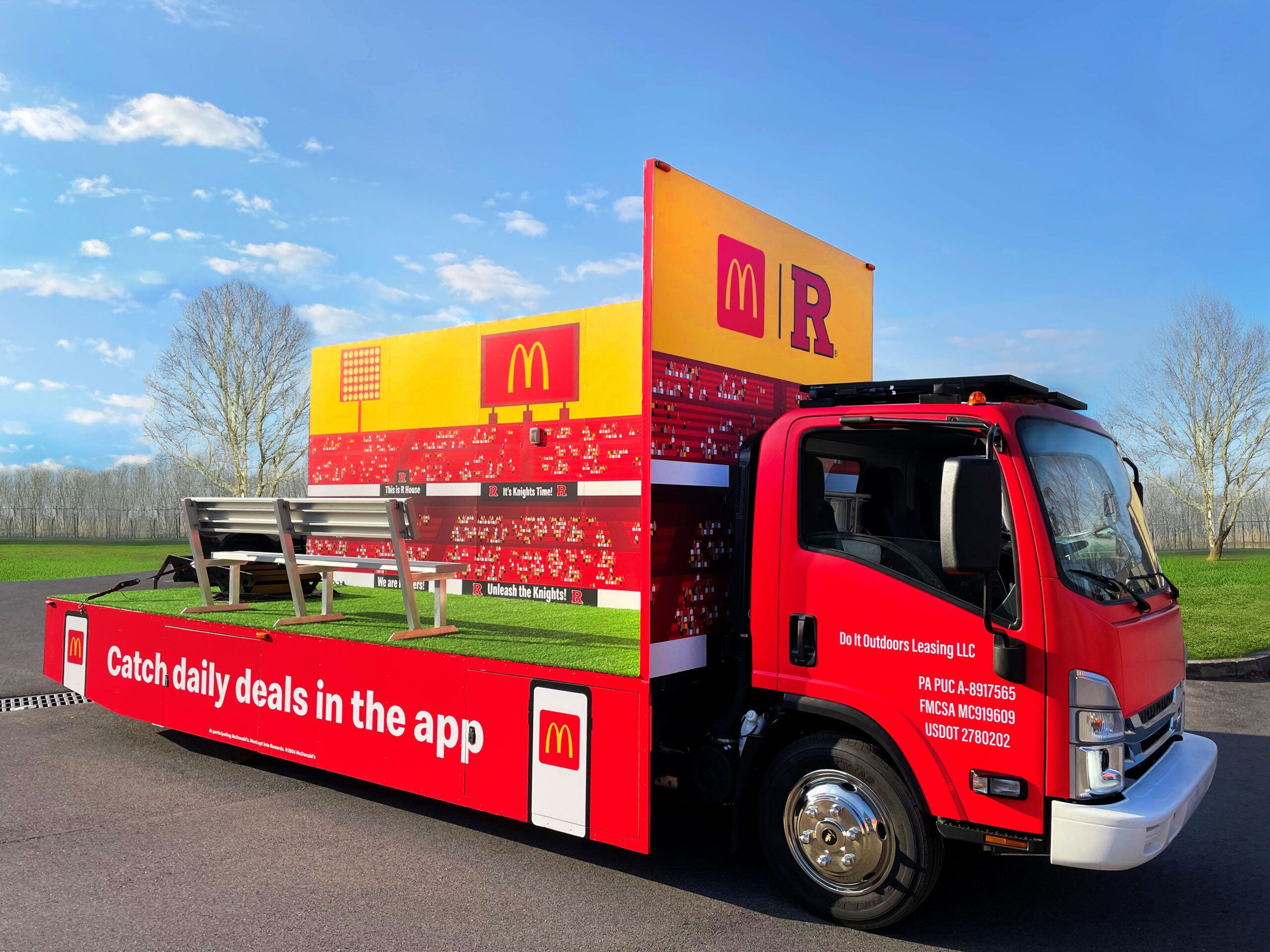





Large format graphics are oversized visual elements designed, produced, and installed within physical environments such as stadiums, museums, corporate spaces, and public venues. These graphics are used to enhance branding, communicate information, and create a cohesive visual experience across a space.
A successful large format graphics installation is about more than creating a polished visual environment. It requires planning that considers how the graphics will function over time, including how easily they can be maintained or updated as needs change.
A recent project for the Harrisburg Senators demonstrates this approach in action.
The Project: Harrisburg Senators Dugout Graphics Upgrade
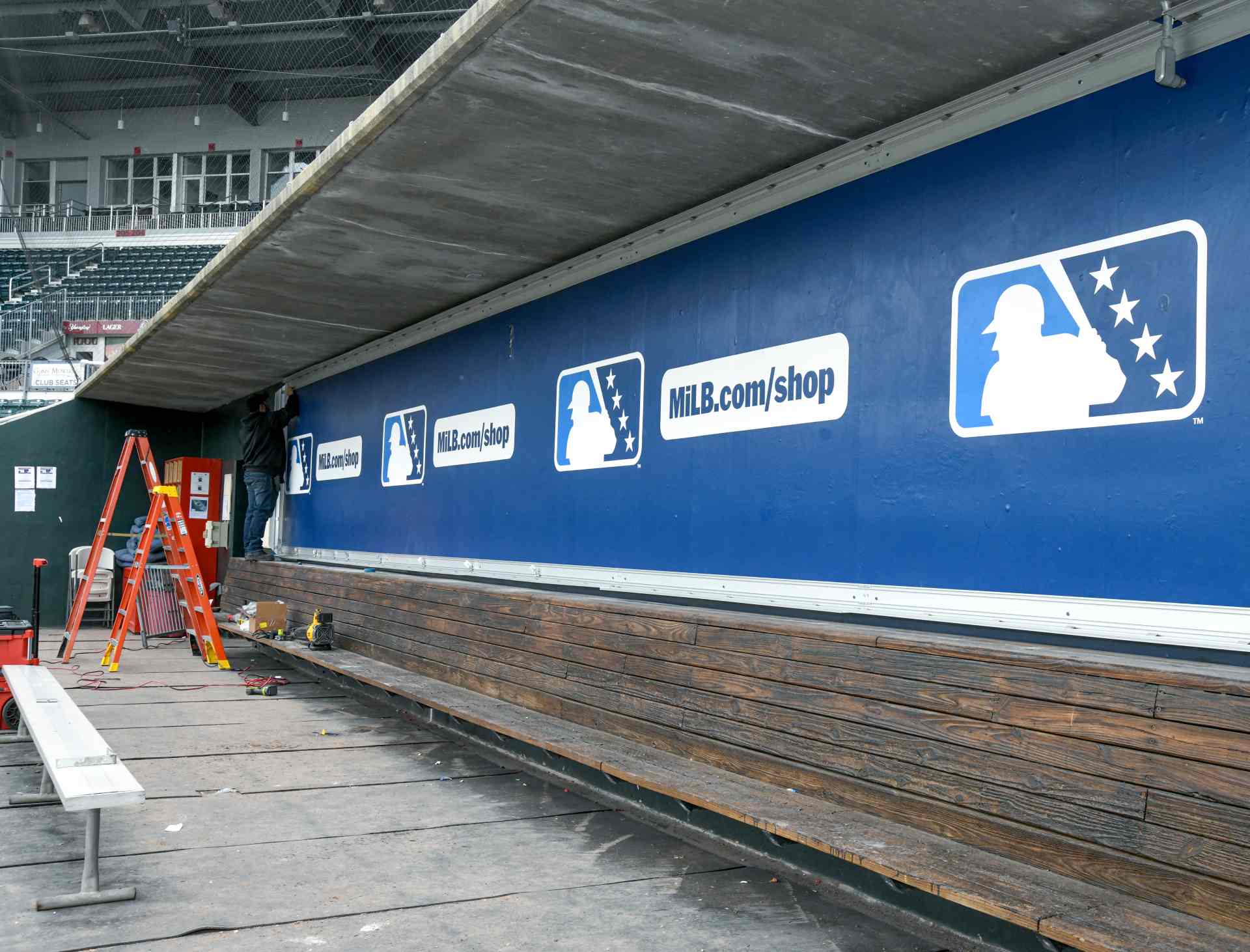
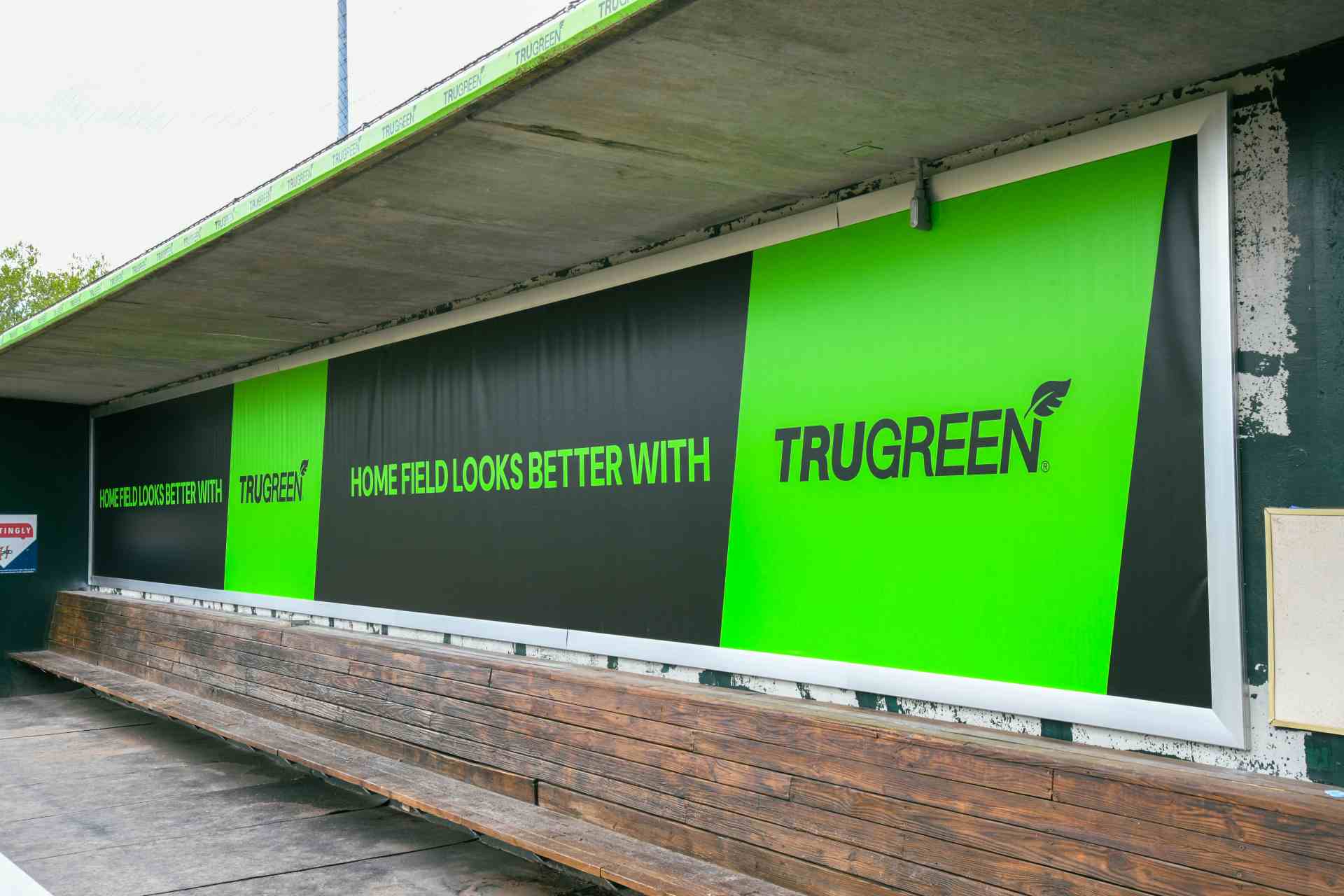
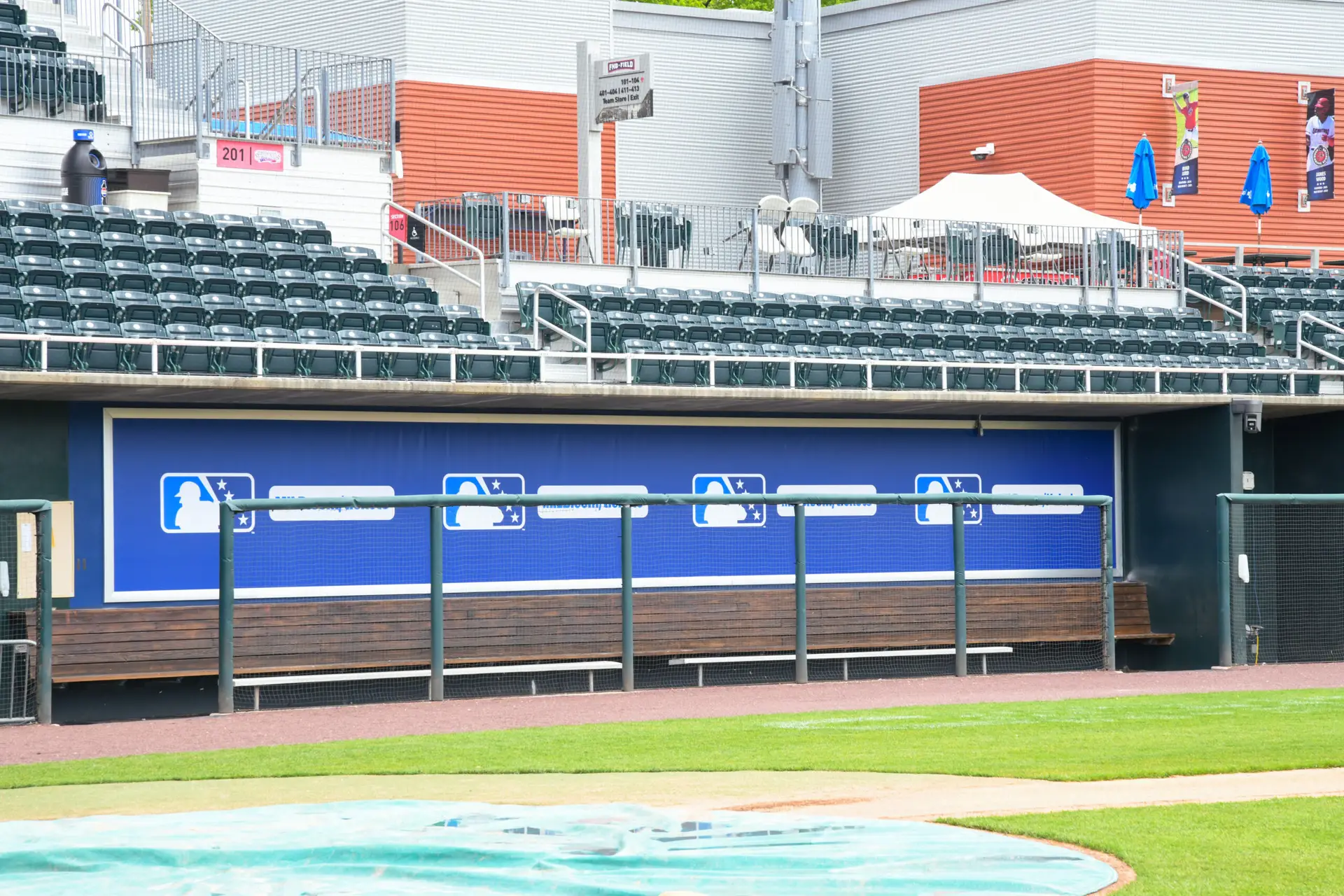
The Harrisburg Senators partnered with Exhibit Studios to refresh the graphics inside their dugout while also improving long-term flexibility for future updates.
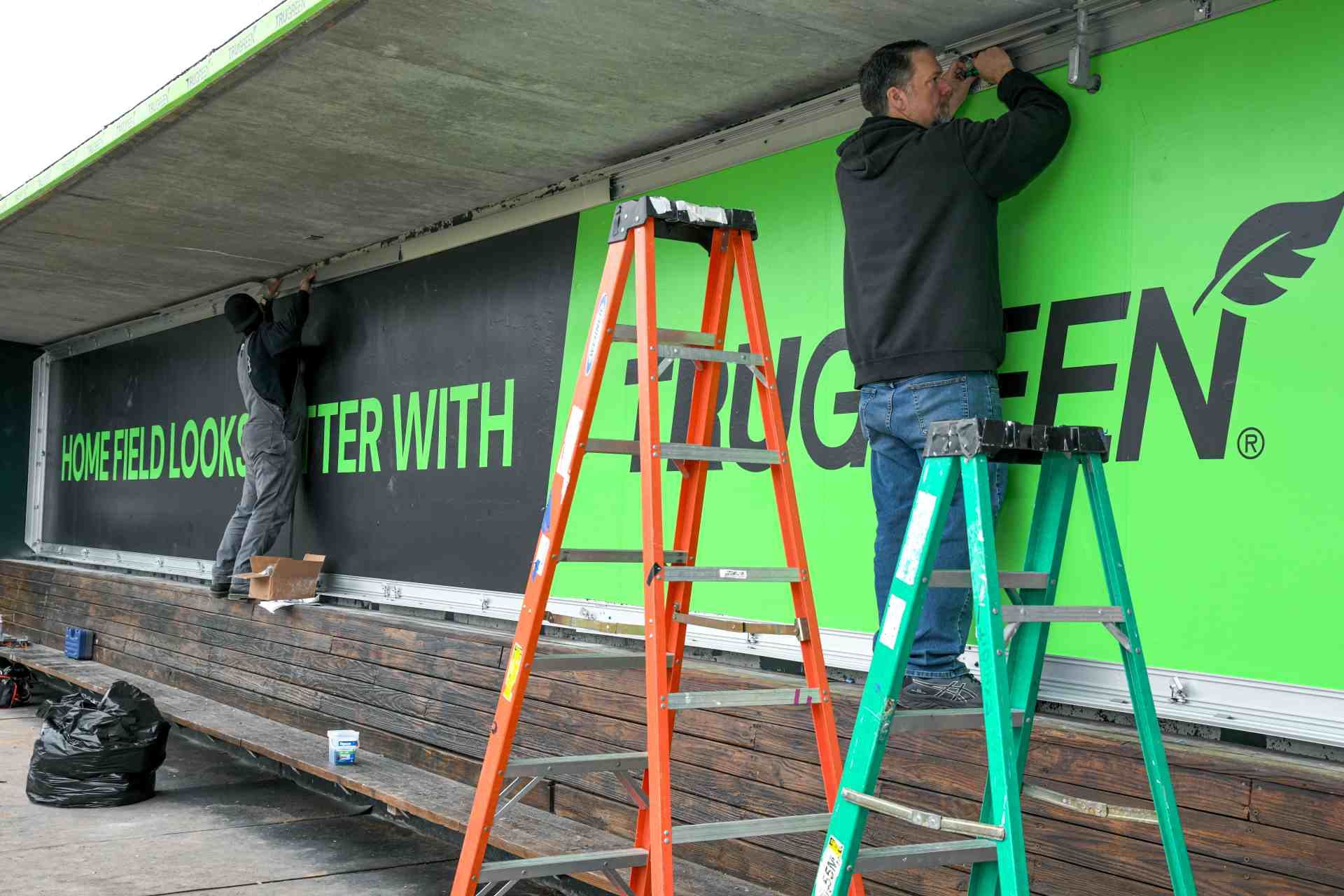
The goal was not only to improve the visual environment, but to create a system that would allow graphics to be replaced efficiently as branding, messaging, or sponsorship needs evolve. To achieve this, snap frame systems were installed directly onto the dugout walls. These frames hold large format printed graphics and create a clean, professional presentation throughout the space.
While the final result appears simple and seamless, the project required detailed coordination across design, production, and installation teams to ensure precise alignment, durability, and long-term usability. Much of the project’s success was determined before installation day through early planning decisions that shaped fabrication, materials, and installation methods.
Planning a Large Format Graphics Project
Planning is one of the most important phases of any large format graphics project. It determines how the system will look, perform, and function over time.
A typical large format graphics project includes four core phases: planning, measurement, production, and installation.
Key planning considerations include:
- Evaluating the installation environment and surface conditions
- Confirming measurements, dimensions, and viewing distances
- Selecting materials based on durability and visual requirements
- Determining mounting and installation methods
- Coordinating production timelines and installation logistics
Strong planning reduces installation issues, improves efficiency, and ensures the final graphics align with both design intent and functional requirements. In many cases, planning decisions have a greater long-term impact than the installation itself.
Why System Selection Depends on the Environment
Every large format graphics project is shaped by how the space is used and how its needs may change over time. While some environments prioritize long-term durability and visual consistency, others require frequent updates to reflect evolving messaging, branding, or sponsorships.
How Different Environments Influence Graphic Systems
The ideal solution often depends on the type of space and its functional demands:
- Sports facilities often require systems that allow for frequent sponsorship and branding updates
- Museums prioritize long-term durability and exhibit consistency
- Corporate, healthcare, and educational environments may need a balance of branding, wayfinding, and compliance
Because of these differences, no single solution fits every application.
Common Large Format Graphics System Options
Material and installation choices are guided by both design intent and long-term usability. Common options include:
- Vinyl graphics for direct application and clean visuals
- Rigid panels for durability and structure
- Fabric systems for lightweight, tensioned displays
- Banners for temporary or seasonal messaging
- Modular frame-based systems designed for replaceable graphics
Each system supports different levels of flexibility, maintenance, and longevity.
Application: Harrisburg Senators Dugout
For the Harrisburg Senators dugout, a snap frame system was selected because it balanced presentation quality with long-term adaptability. This approach allows graphics to be updated without replacing the full installation system. As a result:
- Updates require less labor and reduce downtime
- Long-term maintenance costs are lower
- Branding can evolve without structural changes
- The visual presentation remains consistent over time
Behind the Scenes: From Production to Installation
Once planning and design decisions are finalized, the project moves into execution, where accuracy and coordination become critical.
Measurement and Preparation
Field measurements were confirmed to ensure all frames and graphics were fabricated to exact specifications. This step ensured proper fit and alignment during installation.
Production
Graphics were then printed, finished, and quality-checked prior to delivery. Controlled production processes helped maintain consistency in color, durability, and overall visual quality.
Installation
On site, snap frame systems were installed and graphics were fitted according to the approved plan. Because key specifications were already resolved, the installation process focused on efficient execution and clean alignment rather than on-site adjustments.

Beyond the Dugout: Supporting the Senators Throughout the Facility
The dugout graphics project is just one example of Exhibit Studios’ ongoing work with the Harrisburg Senators. Over the years, we have helped enhance multiple areas of the facility through a variety of large-format graphics applications, each designed to support a specific purpose within the space.


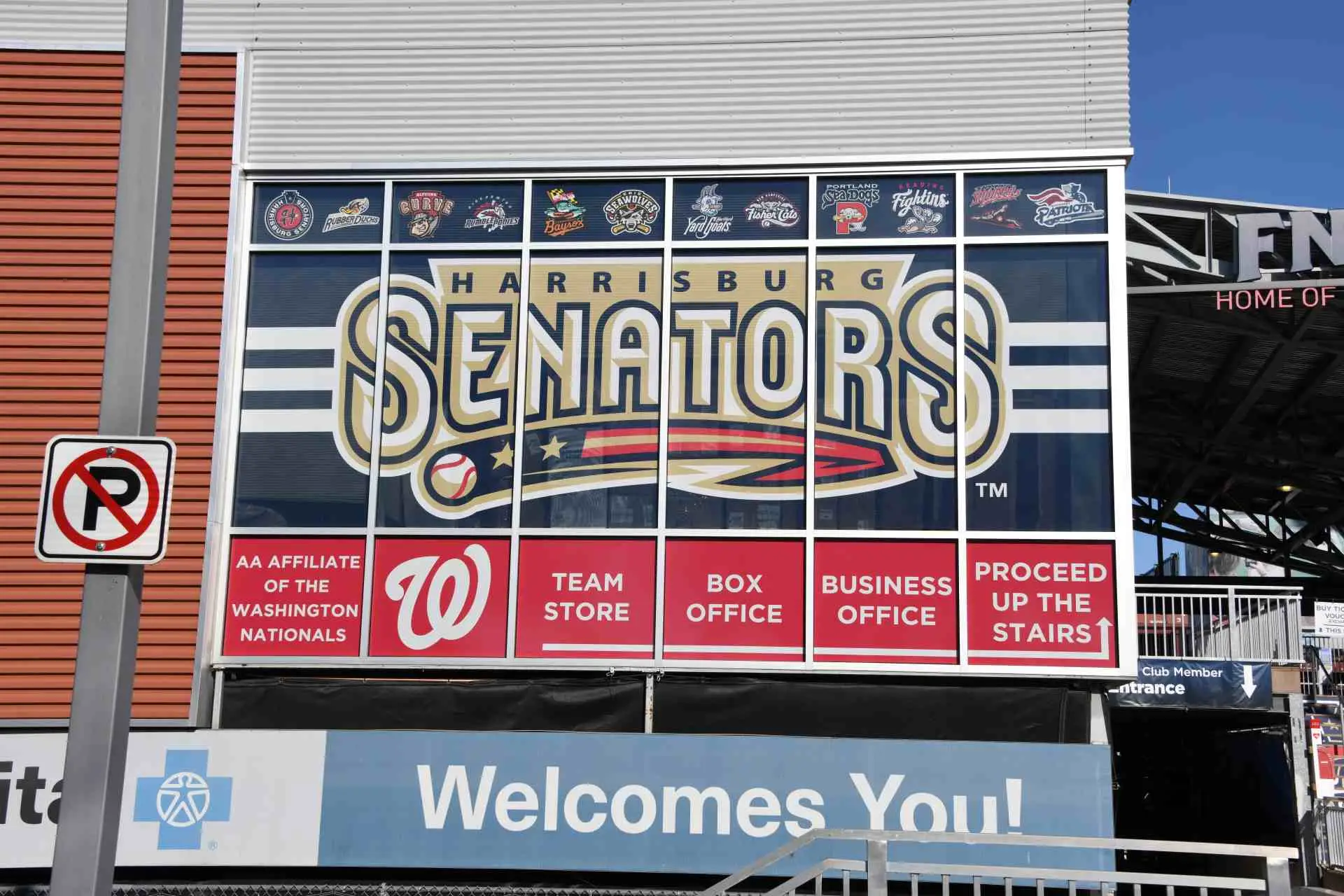
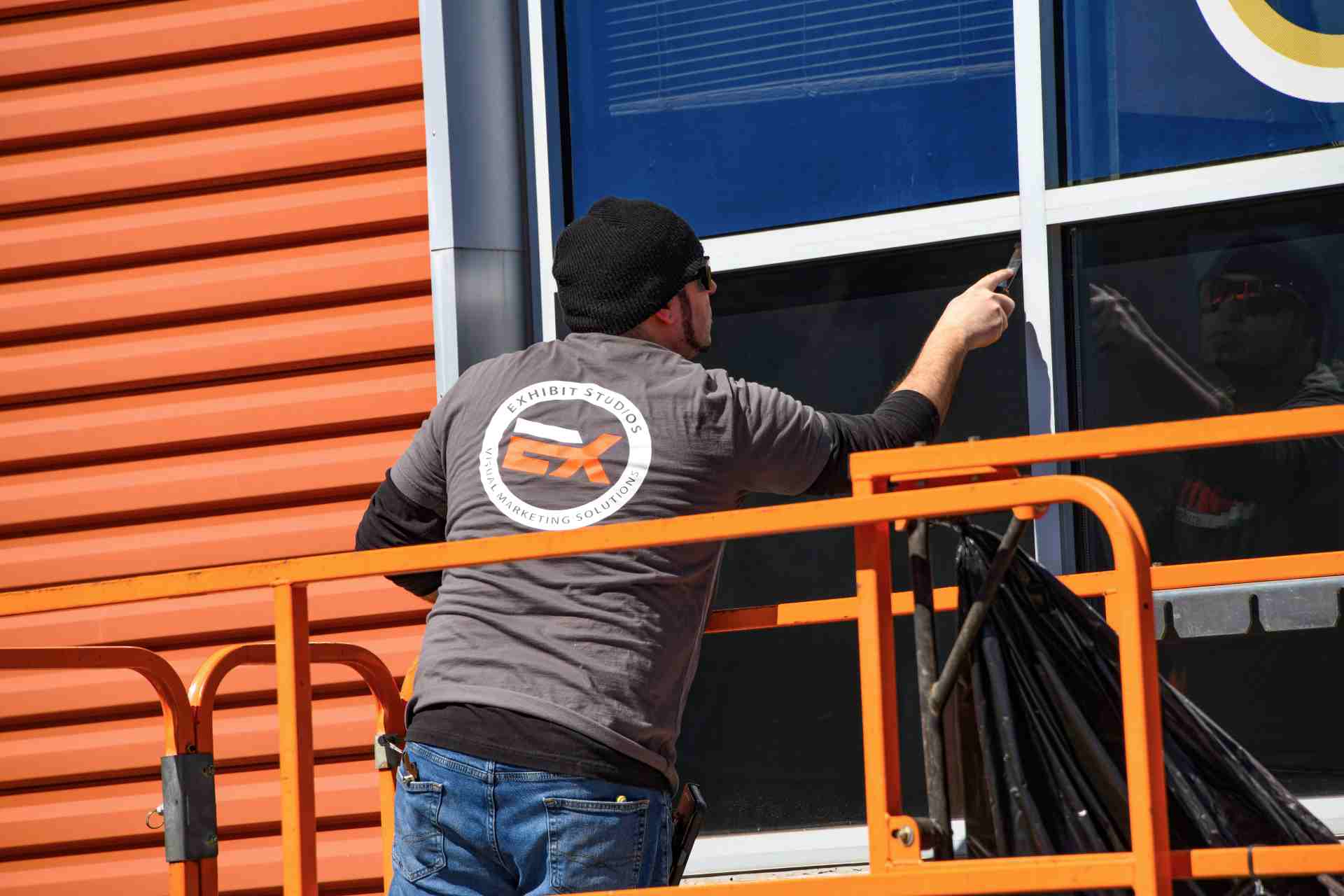
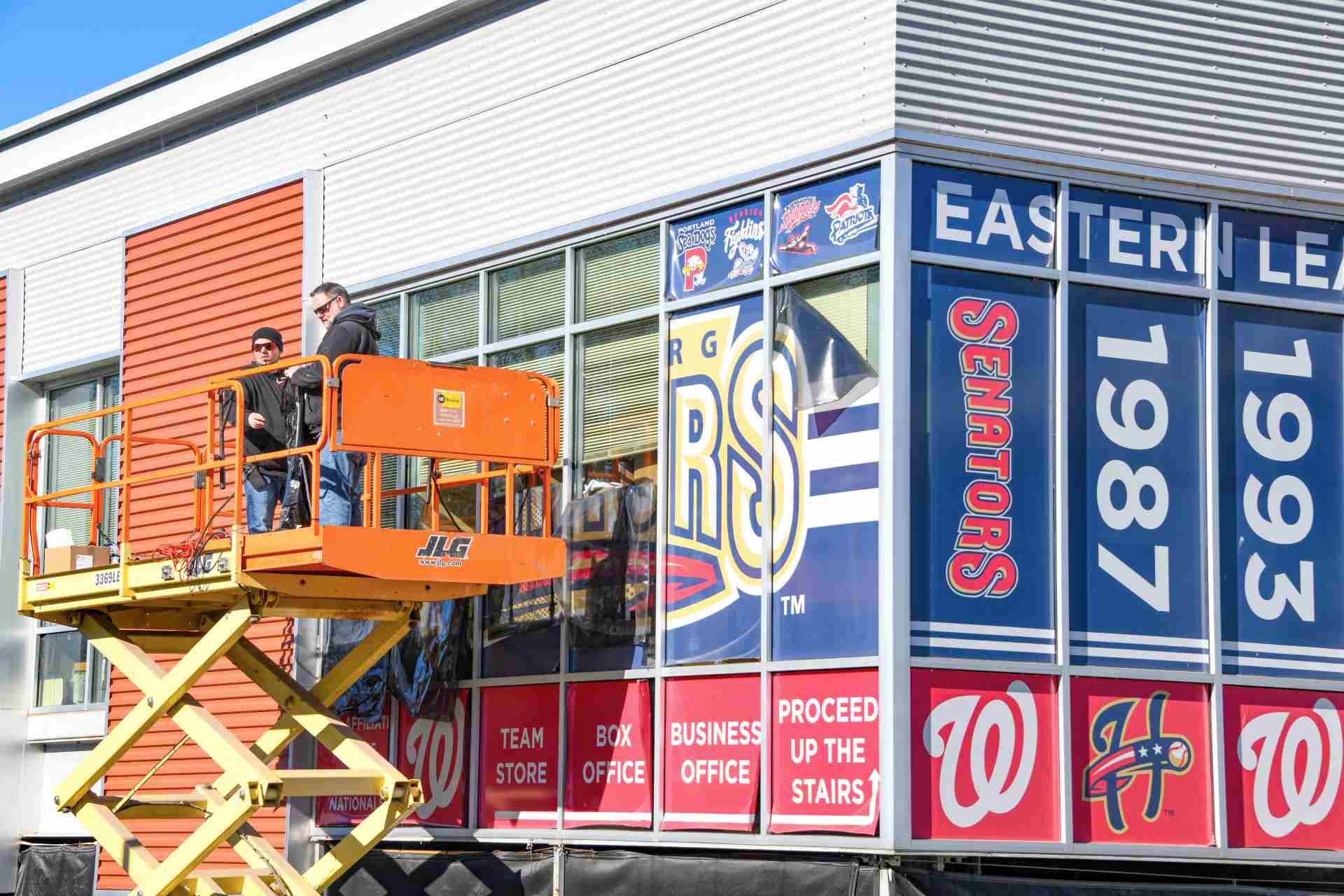
Stair Graphics and Branding Elements
Graphics installed on stairways and adjacent surfaces can transform transitional spaces into opportunities for branding and visual engagement. For the Senators, custom logo graphics helped reinforce team identity while creating a more cohesive experience throughout the facility.
Large Format Window Graphics
Window graphics offer a versatile way to communicate messaging, promote branding, and enhance the appearance of both interior and exterior spaces. Large-format window graphics installed throughout the facility help create visual impact while maximizing existing architectural features.
Interior Wall Graphics
Wall graphics can turn ordinary surfaces into branded environments that tell a story, celebrate an organization, or create a stronger connection with visitors. Interior graphics installed for the Senators contribute to a more immersive experience while reinforcing the team’s identity throughout the venue.
Each of these projects required a different combination of materials, production methods, and installation techniques. Together, they demonstrate how large-format graphics can be used across an entire facility to create a consistent and engaging visual environment.
Key Takeaways From the Senators Project
This project highlights several core principles of effective large format graphics projects:
- Planning for future updates is as important as initial design
- Modular systems improve long-term efficiency and cost control
- Accurate measurement and production reduce installation issues
- The right system selection extends the life and value of the installation
- Strong execution ensures both immediate impact and long-term adaptability
When these principles are applied early, organizations create environments that remain functional and visually effective over time.
Frequently Asked Questions: Large Format Graphics
What are large format graphics?
Large format graphics are oversized visual elements designed for application within physical spaces such as stadiums, museums, corporate offices, retail environments, and public venues. These graphics are used to communicate branding, wayfinding, messaging, or environmental design at a scale that transforms how a space looks and functions.
What should be considered when planning for large format graphics?
Planning should include the installation environment, measurements, materials, durability requirements, mounting methods, and long-term goals for the space.
What materials are typically used in these types of graphics?
Common materials include vinyl graphics, rigid panels, fabric graphics, banner systems, and framed display systems, depending on durability and installation needs.
How long do large format graphics last?
Lifespan varies based on materials and environment. Some installations are temporary, while others are designed to last for many years with proper maintenance.
How are large format graphics updated over time?
Updates depend on the system used. Some graphics are permanently installed, while modular systems allow graphics to be replaced without changing the underlying structure.
What industries use large format graphics?
These graphics are used in sports venues, museums, corporate environments, healthcare facilities, education, retail, and public spaces.
Ready to Plan Your Next Graphics Project?
Whether you’re updating a sports facility, museum, corporate space, or public environment, Exhibit Studios can help design large format graphics tailored to your goals.
Contact us to start planning a system built for both impact and long-term flexibility.