






If you have ever opened a show manual and immediately felt overwhelmed, you are not alone. Trade show service order forms are one of the most confusing parts of exhibiting, and missing a deadline or ordering the wrong thing will cost you significantly more than getting it right the first time.
This is the guide that cuts through it. Here is what you need to know about trade show service order forms, advance warehouse shipping, EAC rules, and every deadline that matters before move-in.
What Are Trade Show Service Order Forms?
Think of service order forms as your pre-show purchasing system. Everything you need at the booth that is not coming in your crates gets ordered here.
Show service order forms are provided by the official show decorator, also called the general service contractor or GSC. They cover everything the venue and decorator supply, including:
- Electrical power and distribution
- Furniture, carpet, and flooring
- Rigging and hanging sign labor
- Material handling (drayage)
- Internet, AV, and lead retrieval
These forms live in the show manual. The forms come with deadlines, and missing those deadlines costs money.
Deadlines: The Part Most Exhibitors Learn the Hard Way
Show service forms are tiered. Order early and you pay the standard rate. Order after the deadline and you pay a surcharge, sometimes 25 to 40 percent more, sometimes higher. Order after move-in has started and you may not be able to get what you need at all.
The Three Deadlines That Matter Most
- Advance order deadline: The cutoff for discounted service pricing, typically 2 to 3 weeks before the show opens. This is the one most exhibitors miss.
- Advance warehouse deadline: The last day your freight can arrive at the advance warehouse and still be guaranteed floor placement before your crew arrives. Missing this means your exhibit may not be at your booth when you get there.
- Direct-to-show deadline: If you are shipping direct to the convention center rather than the advance warehouse, there is a narrow delivery window, usually the first day or two of move-in. Freight arriving outside that window creates serious problems.
A good rule of thumb: pull every deadline from the show manual the day it arrives and put them in your project calendar immediately.
Advance Warehouse vs. Direct-to-Show Shipping
Advance warehouse is almost always the safer choice. Direct-to-show saves a step but adds risk.
Advance Warehouse
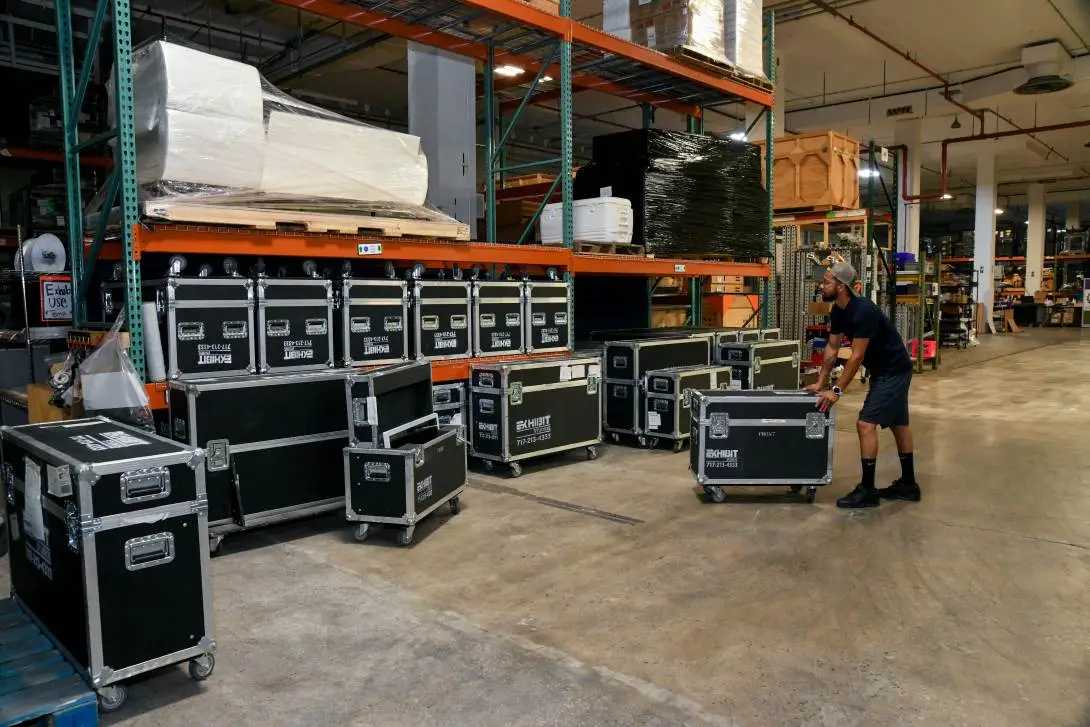
- Freight ships to a third-party warehouse before the show; the decorator delivers it to the floor before move-in begins
- Your exhibit is waiting at your booth when your crew arrives
- Broader receiving window means less time pressure on your shipper
Direct-to-Show
- Freight ships directly to the convention center during the move-in window
- Narrower delivery window with no buffer if your carrier is delayed
- Appropriate for last-minute additions, not recommended as a primary strategy
For most exhibitors, the advance warehouse is worth the extra handling fee. Knowing your exhibit is on the floor before you arrive removes one of the biggest variables in move-in day.
How to Order Electricity and Utilities for Your Booth
Electrical orders are one of the most commonly mishandled service forms. Here is how to get it right.
What to Order
- Calculate total wattage: lighting, monitors, kiosks, charging stations, and any powered demos.
- Add a 10 to 20 percent buffer. Running at maximum capacity is a risk.
- Specify drop locations on your booth footprint. Guessing costs rework fees.
What Exhibitors Get Wrong
- Ordering a single drop and assuming power will be distributed throughout the booth. It will not.
- Forgetting after-hours power if the show cuts house power at close.
- Missing the electrical deadline and paying late surcharges on every line item.
If your exhibit includes lighting systems, AV, or interactive technology, coordinate the electrical order with your exhibit builder early. At Exhibit Studios, we include electrical planning as part of our pre-show logistics process so nothing gets missed.
What Are EAC Rules and Why Do They Matter?
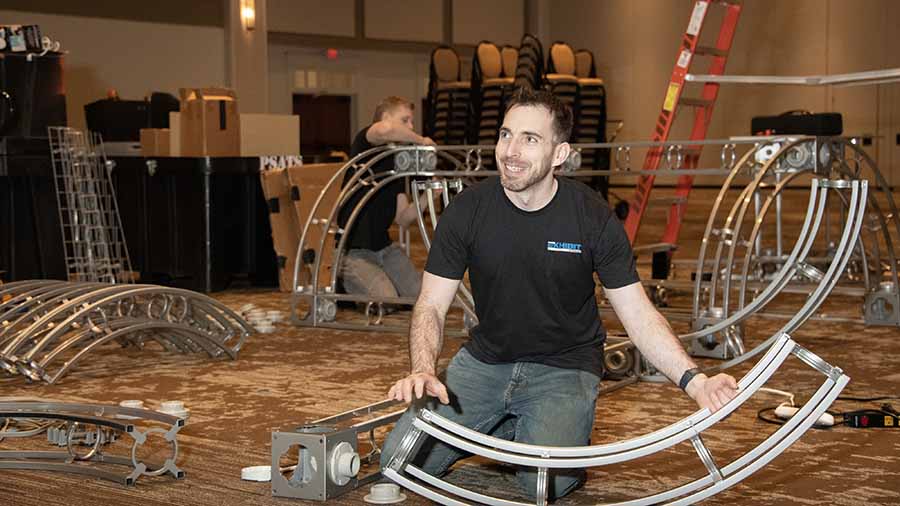
EAC stands for Exhibitor Appointed Contractor. It refers to any vendor you bring to the show who is not the official show decorator. If Exhibit Studios is installing your booth, we are your EAC. Most shows require EACs to register in advance, carry insurance, and comply with union rules about what work they can perform.
What You Need to Do
- Check the show manual for EAC registration requirements and deadlines, usually 2 to 4 weeks before the show.
- Confirm your EAC has the required certificate of insurance and that it names the correct parties.
- Understand which tasks are union-jurisdiction work and which your EAC crew can perform. This varies by venue and city.
Missing the EAC registration deadline can prevent your installation crew from being permitted on the floor. It happens regularly to exhibitors who treat EAC paperwork as a formality.
When Exhibit Studios manages your installation, EAC registration, insurance documentation, and union coordination are handled as part of the service.
Frequently Asked Questions: Trade Show Order Forms
What are trade show service order forms and how do I fill them out?
Trade show service order forms are provided by the official show decorator and cover every service you need beyond what you bring yourself: power, furniture, rigging, material handling, internet, and more. Review the show manual, calculate your requirements by category, and submit before the discount deadline. Most shows offer online ordering portals in addition to paper forms.
What happens if I miss the advance warehouse deadline for a trade show?
If your freight misses the advance warehouse window, it will not be on the floor before move-in begins. Your crew may arrive to an empty space and wait for freight during the build window. Late shipments are often rerouted as direct-to-show, adding handling fees and dock delays.
How do I order electricity and utilities for my trade show booth?
Calculate your total wattage needs, identify drop locations on your booth footprint, and submit the electrical order before the discount deadline. Be specific about drop placement. A single drop in the wrong corner of a 20×20 booth creates costly corrections. If your exhibit includes lighting or AV, coordinate with your exhibit builder before the forms go in.
What is the difference between advance warehouse and direct-to-show shipping?
Advance warehouse shipping sends freight to a holding facility before the show; the decorator delivers it to the floor before move-in. Direct-to-show ships directly to the convention center during the move-in window. Advance warehouse is more predictable with a wider receiving window. Direct-to-show leaves no buffer if your carrier is late.
What are EAC rules and how do they affect my exhibit setup?
EAC stands for Exhibitor Appointed Contractor. Any vendor you bring to the show outside the official decorator is your EAC. Most shows require advance registration, specific insurance, and compliance with union jurisdiction rules. Missing EAC deadlines can prevent your crew from working on the floor. Your exhibit partner should handle registration and compliance as part of their service.
Trade show logistics does not have to be the part that catches you off guard. Contact Exhibit Studios to talk through your next show and get ahead of every deadline.