






Between shows, your exhibit has to live somewhere. For many companies, that somewhere is a corner of a warehouse, a rented storage unit, or a shelf in the office that was never meant to hold a ten foot backwall panel. It works until it doesn’t. Panels warp. Graphics fade. Hardware goes missing. And when the next show is six weeks out, nobody can say for certain what condition the exhibit is actually in.
Trade show storage is not just a place to put things between events. It is a service that protects the investment you made in your exhibit and determines how smoothly your next show goes. Choosing the right exhibit storage warehouse is one of the more overlooked decisions in trade show planning, and it is worth getting right.
Why Trade Show Storage Deserves More Attention
Custom exhibits are expensive to design, build, and ship. A poorly chosen storage arrangement can undo that investment quietly, over time. Humidity warps wood components. Temperature swings crack laminates and delaminate graphics. Dust and pests accumulate in facilities that were not built with exhibit materials in mind. None of this shows up immediately. It shows up during install, when there is no room left in the schedule to fix it.
Companies that treat trade show storage as a strategic decision, rather than an afterthought, consistently arrive at events with exhibits that look and perform the way they did on day one.
Streamlined Shipping with Inventory
Storage and shipping are often handled by two separate vendors, which means every pickup requires its own phone call, its own scheduling window, and its own chance for a miscommunication to delay a shipment. When your exhibit is ready to move, that back and forth costs time you do not have during a compressed show timeline.
A storage warehouse with shipping built directly into daily operations removes that friction entirely. Our carrier operates a dock and office inside our facility, so a component can move from a storage rack to a truck without a separate pickup being scheduled or coordinated across two locations. That proximity keeps your exhibit on schedule and keeps the number of parties your team has to manage down to one.
What to Look for in an Exhibit Storage Warehouse
Not every storage facility is equipped to handle trade show exhibits. Here is what separates a warehouse partner worth trusting from one that is simply offering square footage.
Facility Conditions
Look for climate control, consistent humidity management, and a clean, pest free environment. Ask directly how the facility monitors and maintains these conditions, not just whether it claims to have them.
Security and Access
Your exhibit represents a significant capital investment. The facility should have monitored security, controlled access, and a documented process for who can move or release inventory.
Organized, Trackable Inventory
A warehouse that stacks crates by whatever fits is not a partner, it is a liability. Look for a facility that assigns each component a specific, trackable location and can tell you exactly what is in storage and where, without a physical search.
Handling Experience
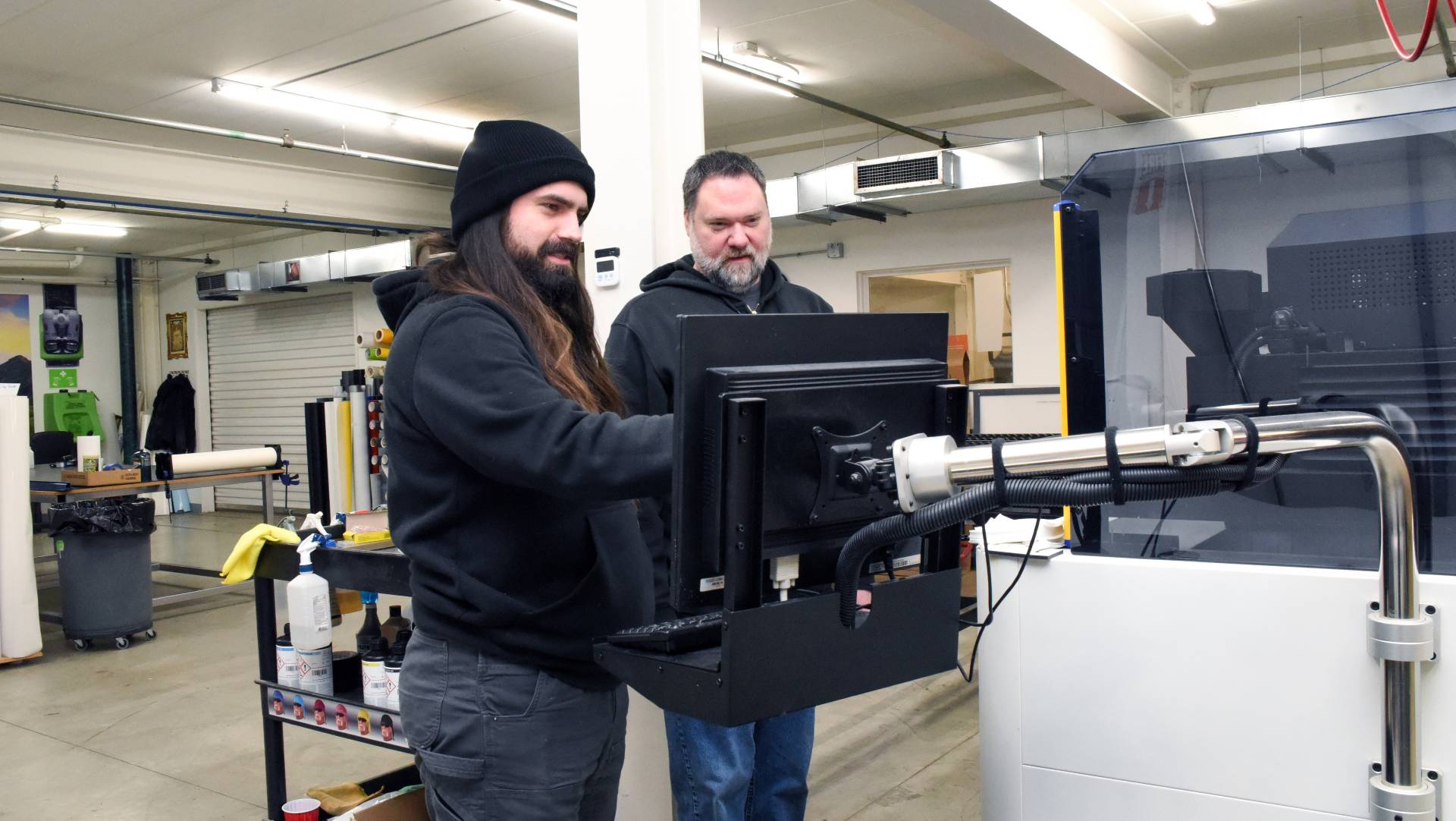
Trade show exhibits are not standard freight. Crates are oversized, components are fragile, and improper handling during storage and retrieval causes more damage than shipping does. A warehouse partner with experience specifically in exhibit storage understands how to move and stage these materials correctly.
Coordinated Shipping
Storage and shipping should work as one system, not two separate vendors you have to coordinate between yourself. A partner who can pull your exhibit from storage, inspect it, crate it, and ship it to your next show on a single timeline removes a significant amount of coordination work from your team.
Inventory Visibility Matters More Than You Think
One of the biggest frustrations exhibitors report is simply not knowing what they have in storage. Exhibits accumulate components over the years, from graphic refreshes to added structural pieces, and without a clear system it becomes hard to know what is available for the next show without a phone call and a wait.
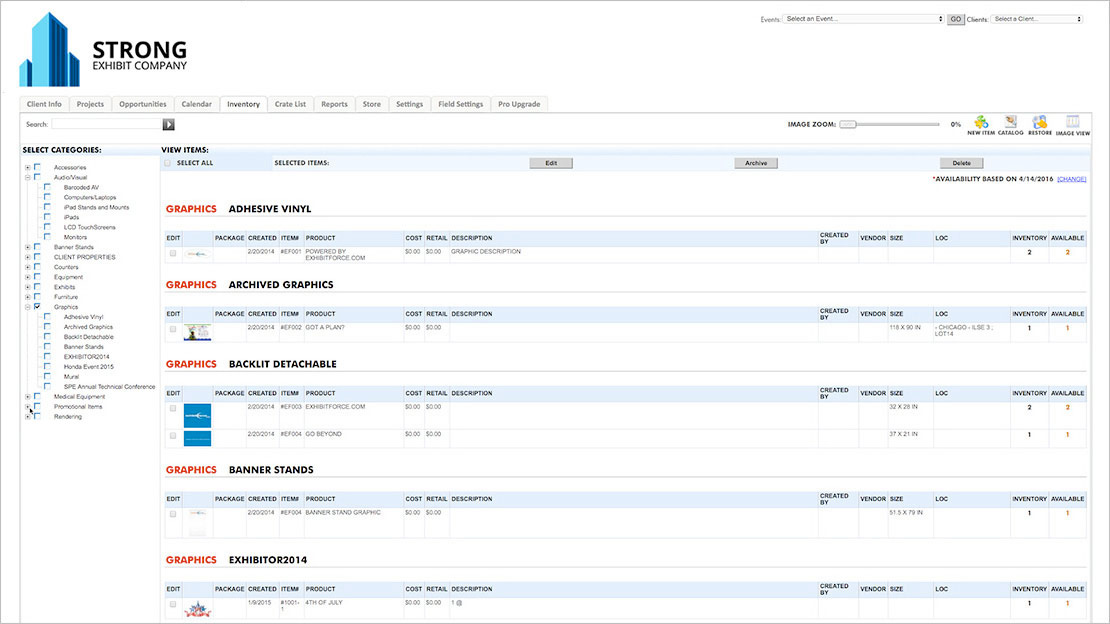
A modern exhibit storage warehouse should offer a way to see your inventory directly, whether through a portal or a documented system that updates as components move in and out. That visibility saves time during planning and prevents the surprise of arriving at a show missing a piece you assumed was there.
Understanding Trade Show Storage Costs
Pricing for trade show storage typically depends on the square footage or crate volume your exhibit occupies, whether the facility is climate controlled, how frequently components move in and out, and whether shipping and handling are bundled into the arrangement. Some facilities charge a flat monthly rate per crate or pallet. Others price by square footage, which tends to make more sense for larger, multi piece exhibits.
Rather than comparing a single monthly number across providers, ask what is included. A lower rate that excludes climate control, inventory tracking, or handling during retrieval can end up costing more in exhibit repair over time than a slightly higher rate that includes those services.
Questions to Ask Before You Sign
Before committing to a storage partner, it helps to ask directly:
- Is the facility climate controlled, and how is that monitored?
- How is my inventory tracked, and can I see it myself?
- What is the process for pulling components for an upcoming show?
- Does the facility handle crating and shipping, or only storage?
- What happens if a component is damaged while in storage?
A confident, specific answer to each of these is a good sign. Vague reassurance is not.
Frequently Asked Questions about Trade Show Exhibit Storage
What should I look for in a trade show exhibit storage company?
Climate controlled facilities, secure and monitored access, trackable inventory systems, staff experienced in handling exhibit materials, and the ability to coordinate crating and shipping alongside storage. A provider who can speak specifically to how they manage each of these is generally more reliable than one offering storage as a generic add-on.
How much does trade show storage cost?
Cost varies based on the volume of your exhibit, whether the facility is climate controlled, and what services are bundled in beyond square footage. Rather than comparing flat rates, evaluate what is included.
Is climate controlled storage necessary for trade show exhibits?
For exhibits with wood components, printed graphics, or electronic elements, yes. Climate controlled storage protects against warping, cracking, mold, and color shift caused by temperature and humidity swings over time.
Can I access or check my exhibit inventory without visiting the warehouse?
A well run exhibit storage warehouse, such as ours, should be able to tell you, without a physical search, exactly what components you have and where they are. Some facilities offer a portal or shared inventory system that gives you that visibility directly.
How far in advance should I schedule my exhibit to be pulled from storage for a show?
As early as your show planning allows. Advance notice gives the storage team time to inspect components, handle any needed refurbishment, and coordinate shipping so your exhibit arrives on schedule.
How Exhibit Studios Handles Trade Show Storage
Everything above describes what to look for in a storage partner. Here is how we approach it ourselves, since it is the same standard we hold every client to.
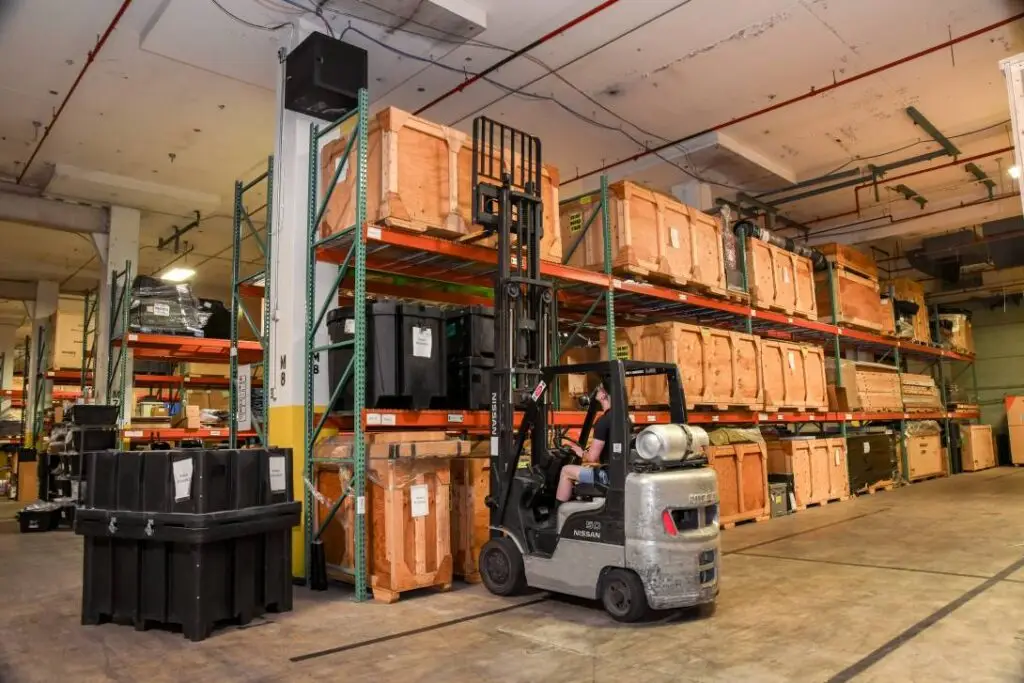
Our facility spans 80,000 square feet dedicated specifically to trade show storage, staging, and shipping. That space houses exhibits, graphics, promotional materials, and everything else that supports a show program, all in a secure, organized environment built for exhibit materials rather than general freight.
Visibility is built into the process, not added on afterward. Our custom inventory management platform gives your team real time access to what is in storage, what is currently out at a show, and what is on its way back. Authorized users can view the full inventory catalog with photos and descriptions, place orders for upcoming shows, track shipping and return timelines, and see the condition of items as they come back in. Each team member works from a branded portal specific to their department, so there is no confusion over what belongs to whom, just a clear picture of everything that is available and where it stands.
We also build the crates and storage solutions around your materials rather than fitting your materials into generic containers, and we coordinate shipping directly out of the same facility. Whether you are managing a single booth or a national calendar of shows, the goal is the same: your assets stay organized, protected, and ready the moment you need them.
Protect Your Investment Between Shows
Your exhibit is only as reliable as the place it lives when it is not on the show floor. Trade show storage that is secure, trackable, and coordinated with shipping protects the investment you made in your exhibit and removes a significant source of stress from show planning.
If you are evaluating storage options or want a second opinion on your current setup, our team is glad to walk through what a well run exhibit storage warehouse should look like for your program. Reach out to Exhibit Studios and let’s talk about what full inventory visibility, secure storage, and coordinated shipping could look like for your next show.