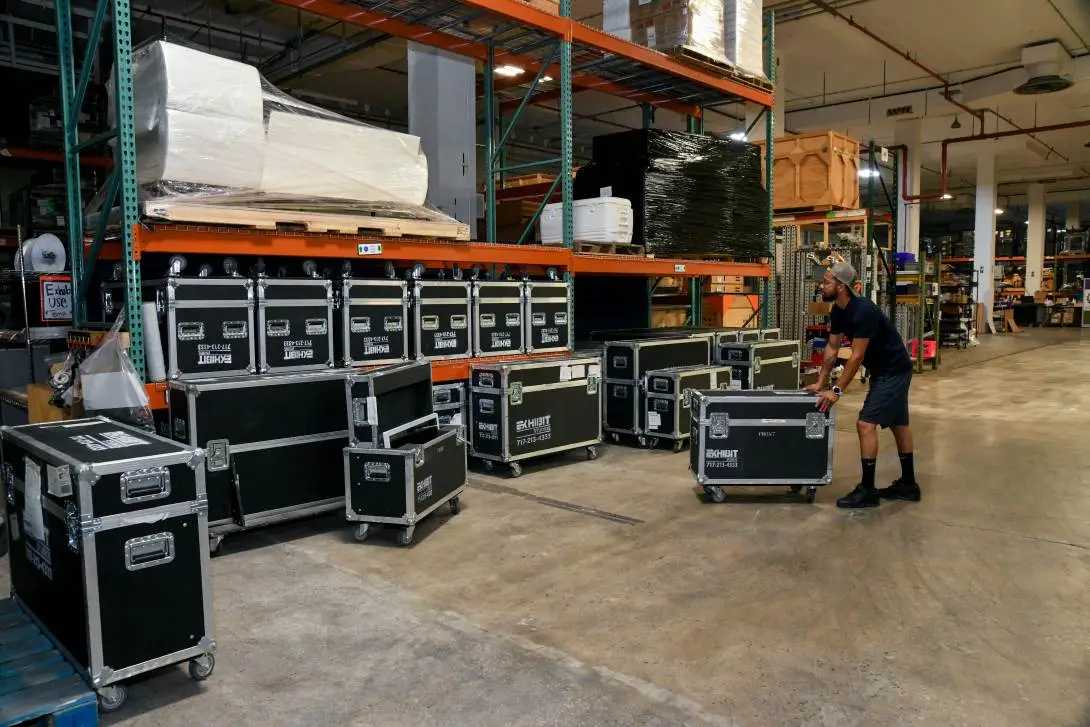







Most exhibitors can tell you where their booth was used last. Far fewer can say, on the spot, exactly what is sitting in storage right now, what condition it is in, or what is already committed to the next show on the calendar. That gap between what a team assumes and what is actually true is where trade show logistics quietly breaks down. A crate everyone thought shipped Tuesday turns up Thursday. A graphic panel someone swore was replaced is still the old version. None of these are dramatic failures on their own, but they add up, and they tend to surface at the worst possible time.
A trade show inventory management portal exists to close that gap. It is not a tool most exhibitors know to ask for, but for marketing operations teams and trade show managers coordinating several events a year, it is one of the more useful things a storage and logistics partner can offer.
What Is a Trade Show Inventory Management System?
A trade show inventory management system is a software layer that sits on top of physical storage. Instead of calling a warehouse and waiting for someone to walk the floor and report back, authorized users log into a portal and see, in real time, exactly what they have, where it is, and what condition it is in.
At its core, trade show asset tracking software replaces phone calls and memory with a live, searchable record. Instead of asking a warehouse manager to check, a marketing coordinator can open a browser, search an item, and get an answer in seconds. That shift, from asking to checking, is what separates a modern storage partner from one that is simply offering square footage.
Why Manual Inventory Tracking Falls Short
Many companies manage exhibit inventory through a shared spreadsheet, an email thread, or a phone call to whoever last touched the storage unit. It works for a while. Then a graphic gets updated and the spreadsheet does not, or the person who knew where everything was leaves the company, and the record goes with them.
Manual tracking depends on someone remembering to update it, and it rarely reflects what is happening in real time. Components move between shows, storage, and refurbishment constantly, and a spreadsheet updated once a month cannot keep pace. The result is a team that finds out what it actually has only when it is already too late to fix a gap.
What a Modern Exhibit Inventory Portal Should Include
Not every storage provider that mentions an online system is offering the same thing. Here is what an exhibit inventory portal should actually do:
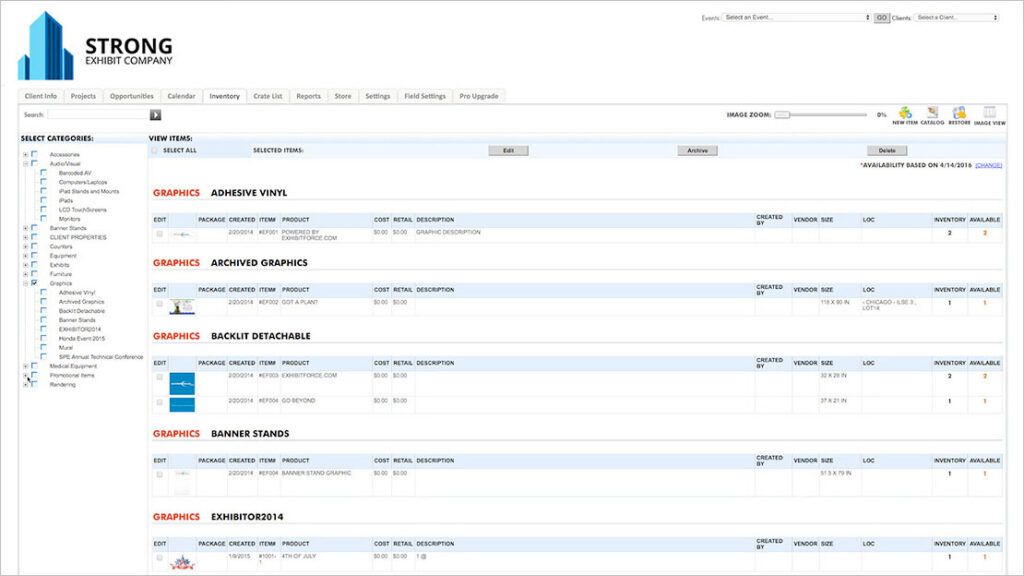
- Real-Time Visibility: The portal should reflect what is true right now, not what was true at the last physical count. When a component moves from storage to a show or back, that change should be visible immediately, with photos and descriptions for every item in the catalog.
- Order and Request Management: Authorized users should be able to place orders for upcoming shows directly through the portal, specifying which components are needed and when, rather than routing every request through email or a phone call.
- Shipping and Return Tracking: A useful portal tracks a shipment from the moment it leaves storage through delivery, use at the show, and return, so a team always knows where an asset stands in that cycle instead of guessing.
- Condition Reporting: Items coming back from a show should be logged with their condition on return, so damage or wear is flagged immediately instead of discovered during pre-show inspection for the next event.
- Multi-User, Department-Level Access: Larger organizations often have multiple departments or regional teams pulling from the same inventory. A well-built portal gives each group its own branded view of the assets relevant to them, so there is no confusion over what belongs to whom.
Questions to Ask Before You Rely on an Inventory Portal
Before assuming a storage provider’s system will meet your needs, ask directly:
- Is inventory data updated in real time, or only after a manual count?
- Can my team place orders and requests directly through the portal?
- Does the system track shipping and return status, not just storage location?
- Is item condition logged and visible when components come back from a show?
- Can different departments or team members have their own access and view?
A provider who can speak specifically to each of these is a stronger long-term partner than one offering a login page as an afterthought.
Frequently Asked Questions About Trade Show Inventory Management Systems
What is a trade show inventory management system?
It is an online system that gives authorized users real-time visibility into exhibit components in storage, including their location, condition, and availability. Instead of contacting a warehouse and waiting for a manual check, users log in and see current inventory directly.
How do I track my exhibit assets across multiple shows?
An exhibit inventory portal is built for exactly this. It gives teams a single, continuously updated view of every component regardless of how many shows or locations a company exhibits at, so nothing has to be tracked separately in spreadsheets or email threads.
Do exhibit storage companies offer online inventory access?
Some do, though the depth of what they offer varies widely. A basic system may only show what is in storage. A more complete exhibit inventory portal also supports order requests, shipping and return tracking, and condition reporting.
Who should have access to an exhibit inventory portal?
Anyone responsible for planning, ordering, or approving exhibit logistics, including marketing operations staff, trade show managers, and departmental stakeholders who need visibility into what is available for their events.
Does an inventory portal replace the need for a storage warehouse?
No. The portal is the visibility layer on top of physical storage, not a substitute for it. A trade show asset tracking system is most valuable when it is connected directly to a warehouse that is actively managing, staging, and shipping the components it tracks.
How Exhibit Studios Built Its Virtual Inventory Portal
Everything above describes what a trade show inventory management system should do. Here is how we built ours.
Our custom inventory management platform, Exhibitforce, gives your team real-time access to what is in storage, what is currently out at a show, and what is on its way back. Authorized users can view the full inventory catalog with photos and descriptions, place orders for upcoming shows, and track shipping and return timelines as components move through the cycle.
Each team member works from a branded portal specific to their department, so there is no confusion over what belongs to whom, just a clear picture of everything that is available and where it stands. The result is an exhibit inventory system built for teams managing a single booth or a national calendar of shows, with the same level of visibility either way.
See Your Inventory Clearly, Every Time
Guesswork has a cost, and it usually shows up at the worst possible time, during move-in, with no room left in the schedule to fix it. A trade show inventory management portal removes that guesswork by giving your team a live, accurate picture of every asset you own.
Ready to see what real-time inventory visibility looks like for your program? Contact Exhibit Studios to get a walkthrough of our inventory portal and find out what full visibility could mean for your next show.