






A single show is a project. A national show calendar is a program. Once a company is exhibiting at five, twelve, or twenty events a year across multiple regions, trade show logistics management becomes an important part of keeping the entire program on track. The way an exhibit is stored, staged, shipped, and tracked stops being a logistics detail and becomes a factor in how well the whole program performs.
Most of the friction in a national show schedule does not come from any single event. It comes from treating storage, shipping, staging, and inventory visibility as separate problems handled by separate vendors, each with its own point of contact and its own blind spots. Centralizing those functions under one program turns a collection of individual show logistics headaches into a single, coordinated system.
Why a National Show Schedule Changes the Logistics Equation
When a company exhibits once or twice a year, storage and shipping are relatively simple. The exhibit goes into storage after the show, comes out before the next one, and there is enough time between events to catch and fix most problems.
A national calendar removes that buffer. Shows overlap. Components come back from one venue while another set is already being staged for the next. Multiple pieces of the same program can be in transit, in storage, and on a show floor at the same time. Trade show logistics management at this scale requires a system built to track and coordinate all of it at once, not a series of one-off arrangements repeated show after show.
What Fragmented Show Logistics Costs a Program
Multi show exhibit management that relies on separate, uncoordinated vendors for storage, shipping, and staging tends to accumulate the same set of problems over the course of a season.
- No single source of truth for what inventory exists, where it is, and what condition it is in
- Duplicate coordination work every time a component moves between storage, a show, and back again
- Inconsistent handling standards from one vendor to the next, which increases wear and damage over a season
- Budget unpredictability, since every vendor prices and bills separately
- Slower response when a show date moves or two events land closer together than planned
None of these problems are dramatic on their own. Over a full calendar of shows, they add up to real cost, both in dollars and in the time a marketing or events team spends managing vendors instead of managing the program.
What Centralized Storage Brings to a Multi Show Program
Centralizing storage does not just consolidate crates in one building. Done well, it becomes the coordination point for the entire show calendar.
- Single Point of Inventory Visibility: Every component lives in one system, whether it is in the warehouse, in transit, or on a show floor. There is one place to check what is available for an upcoming event instead of a phone call to whichever vendor happens to have it last.
- Coordinated Staging Across Shows: When storage, staging, and shipping sit under one roof, components can be pulled, inspected, and prepped for the next show without waiting on a separate facility or a separate team to catch up.
- One Shipping Relationship for the Whole Calendar: Instead of coordinating freight separately for every event, a centralized program works with a shipping partner who already knows the inventory, the storage location, and the show schedule. That familiarity shortens the time between a pull request and a truck leaving the dock.
- Consistent Handling Standards: One team handling storage, staging, and shipping applies the same standards to every component at every stage. That consistency is what keeps an exhibit looking and performing the same way at show twelve as it did at show one.
- Predictable Program Level Costs: A single program relationship makes it possible to budget at the calendar level rather than reconciling separate invoices from separate vendors after every show.

What to Look for in a Trade Show Logistics Management Partner
Not every storage or shipping vendor is built to support a national program. Here is what separates a partner capable of managing a full show calendar from one that can only handle individual events.
- Program level account management, with one point of contact who understands the full show calendar, not just the next event
- Real time inventory visibility across every show, whether components are in storage, in transit, or on-site
- Storage, staging, and shipping coordinated under one team rather than handed off between separate vendors
- Refurbishment and asset management between events, so wear is caught and addressed before it becomes a show day problem
- Capacity that scales as the calendar grows, without renegotiating terms every time a new show is added
Questions to Ask Before Centralizing Your Show Logistics
Before consolidating storage, shipping, and staging under one partner, it helps to ask directly:
- How is inventory tracked across every show on our calendar, not just the most recent one?
- Who manages shipping coordination between storage and each individual venue?
- How are components staged and inspected before they leave for a show?
- What happens if two shows on the calendar overlap?
- How is damage or loss tracked and resolved across a full season of shows?
A partner managing programs at this scale should be able to answer each of these specifically. A vague answer to any one of them is a sign the partner is used to handling single events, not a full calendar.
Frequently Asked Questions about Trade Show Program Management
What is trade show program management?
Trade show program management is the coordination of storage, shipping, staging, and inventory visibility across a company’s full calendar of shows, rather than managing each event as a separate project. It treats the exhibit program as one ongoing system with a consistent set of standards and a single point of visibility.
How do companies manage exhibits across multiple trade shows?
Companies exhibiting at multiple shows a year typically centralize storage and shipping with a single partner who can track inventory in real time, coordinate staging between events, and maintain consistent handling standards across the calendar. This reduces the coordination work that falls on an internal marketing or events team.
How do I coordinate exhibit shipping for a national show schedule?
The most reliable approach is working with a storage and shipping partner who operates as one coordinated program rather than separate vendors. When storage and shipping are handled by the same team, components can move from the warehouse to a show and back without a separate handoff or scheduling call for every event.
Does centralized storage make sense for a smaller show calendar?
It can, particularly if a company anticipates growing its show calendar. Centralized inventory visibility and coordinated shipping benefit any company managing more than one show a year, and the value increases as the number of shows grows.
How much does trade show logistics management cost for a multi show program?
Cost depends on the volume of inventory, the number of shows on the calendar, and how much of the program, storage, staging, shipping, and refurbishment, is bundled together. Programs managed under one partner are typically easier to budget than the same services purchased separately show by show.
How Exhibit Studios Supports National Show Programs
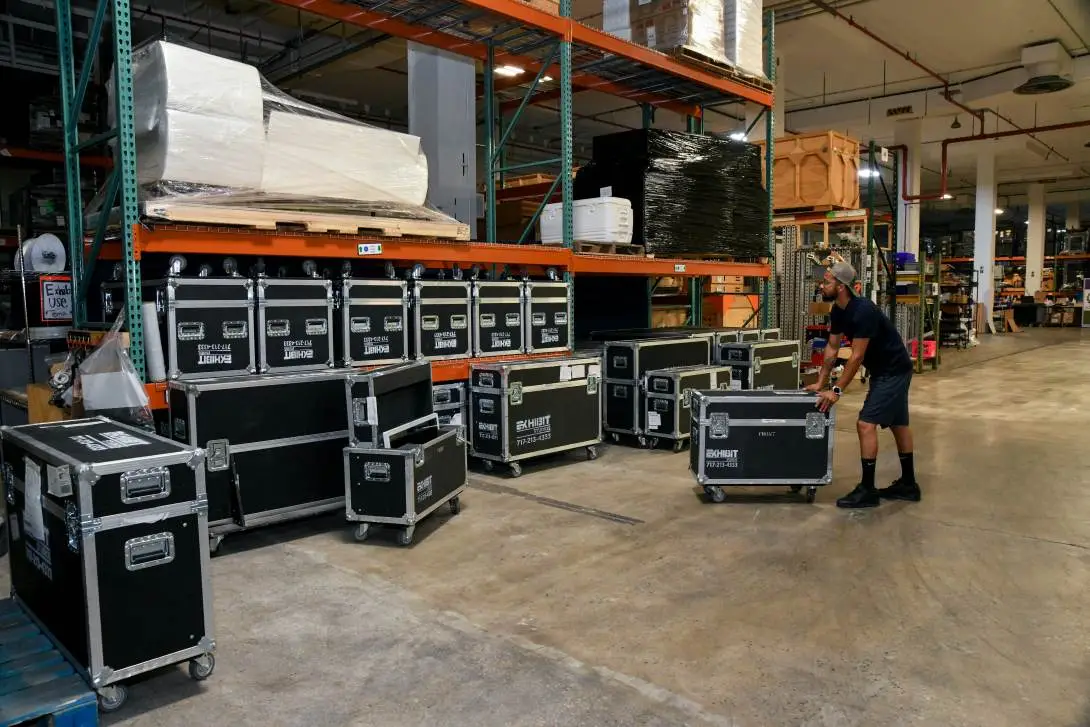
Our 80,000 square foot facility is built to support a full show calendar, not just a single event. Storage, staging, and shipping all happen under one roof, and our shipping carrier operates a dock and office directly inside the facility, so components move from storage to truck without a separate pickup call or a second vendor to coordinate with.
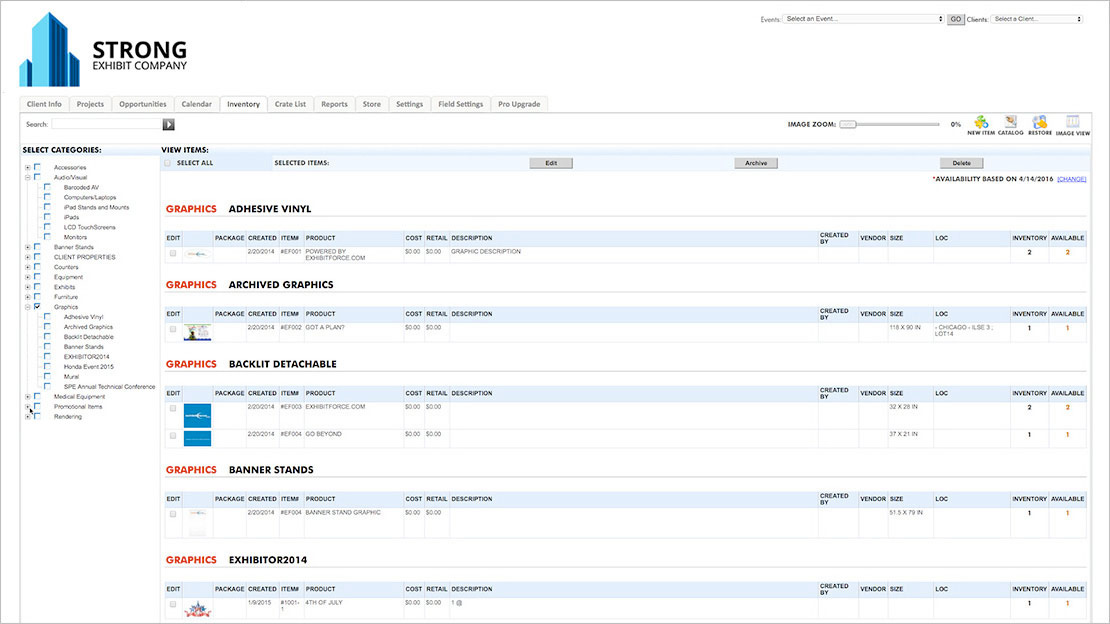
Our custom inventory management platform gives your team real time visibility into what is in storage, what is currently out at a show, and what is on its way back, across your entire calendar rather than one event at a time. Authorized users can view the full inventory catalog with photos and descriptions, place orders for upcoming shows, and track shipping and return timelines from a single portal.
As your show calendar grows, our team scales with it. Whether you are managing four shows a year or forty, the goal is the same: your program runs on one coordinated system instead of a patchwork of separate vendors.
Keep Your National Show Schedule on Track
A national show calendar performs best when storage, shipping, staging, and inventory visibility work as one system instead of a set of separate problems managed show by show. Centralizing those functions removes coordination work from your team and gives your program a level of consistency that is hard to achieve with multiple vendors.
If your show calendar has outgrown a one-off approach to logistics, contact Exhibit Studios to talk through your national show schedule.