




When it comes to maximizing the value of your trade show program, trade show asset management is one of the most overlooked factors. Most teams focus on booth design and event execution, but what happens between shows has a direct impact on cost, efficiency, and long-term performance. Once your exhibit is treated as a managed asset instead of a one-time build, it becomes a scalable resource that can be reused, optimized, and deployed more effectively across every event.
For marketing and event professionals, this shift is not just operational. It directly affects budgets, planning efficiency, and how smoothly each trade show runs from start to finish.
Your Exhibit Is Not a One-Time Expense
A trade show booth is often treated as a fixed deliverable: design it, build it, ship it, use it, and repeat. But in reality, it is a collection of reusable marketing assets that should perform over multiple years and events.
When these assets are not actively managed, inefficiencies build quickly. Teams lose track of what exists, duplicate purchases happen, and usable materials are replaced earlier than necessary.
Trade show asset management solves this by shifting the mindset from “project-based builds” to ongoing lifecycle management. Instead of starting over for every show, you are working from a defined, trackable inventory that evolves alongside your marketing strategy.
What Trade Show Asset Management Means in Practice
At its core, trade show asset management is the process of organizing, tracking, maintaining, and optimizing every physical component in your exhibit program. But in practice, it’s a lot more useful than a definition. For marketing and event teams, it means:
- Knowing exactly what you have: You can see every component of your exhibit program in one place instead of digging through spreadsheets or scattered files.
- Understanding condition and usability: You know what is ready to go, what needs attention, and what should probably be replaced before your next show.
- Reducing unnecessary purchases: Before ordering anything new, you can quickly confirm whether you already own something that will work.
- Planning shows with confidence: You’re not guessing what will show up or whether key pieces are available.
This level of control takes a lot of the uncertainty out of trade show planning, which is usually where most of the stress comes from.
The Lifecycle Problem Most Teams Do Not See
One of the biggest challenges in exhibit programs is that assets move through a lifecycle, but most companies don’t actively manage it. That lifecycle looks like this:
- Build and production
- Initial deployment at a trade show
- Dismantle and return
- Storage
- Inspection and maintenance
- Reconfiguration or reuse
- Repeat deployment
Where things usually break down is between steps 3 and 6. Without a structured system in place, damage can go unrecorded, components may be stored inconsistently, and usable assets often get forgotten in storage. Repairs are delayed or skipped altogether, and by the time the next show comes around, teams are working with missing or incomplete information.
Over time, these gaps lead to higher costs and less reliable exhibit performance. Strong exhibit asset management keeps this cycle intact and repeatable, so nothing gets overlooked and every asset is ready when it is needed.
The Most Important Phase: What Happens Between Shows
The period between events is where most long-term exhibit value is either protected or lost. Once a show ends, your booth should not just be packed up and set aside. It should be actively processed.
A proper post-show workflow includes:
Inspection: Every component is checked for damage, wear, or missing parts.
Cleaning and restoration: Materials are cleaned, repaired if needed, and brought back to show-ready condition.
Documentation: Inventory records are updated so teams always know what is available.
Organized repacking: Items are labeled and packed in a consistent system so the next setup is faster and easier.
This process prevents small issues from turning into expensive problems later. A missing connector or slightly damaged panel is much easier and cheaper to handle immediately than days before your next event.
The Infrastructure Behind Trade Show Asset Management
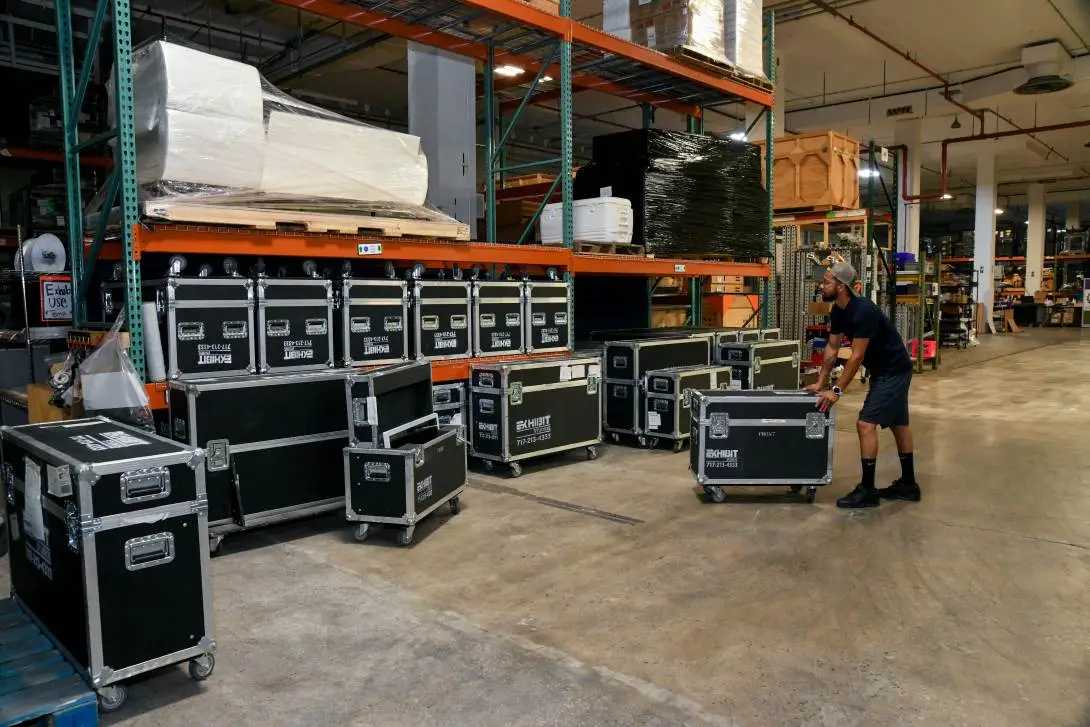
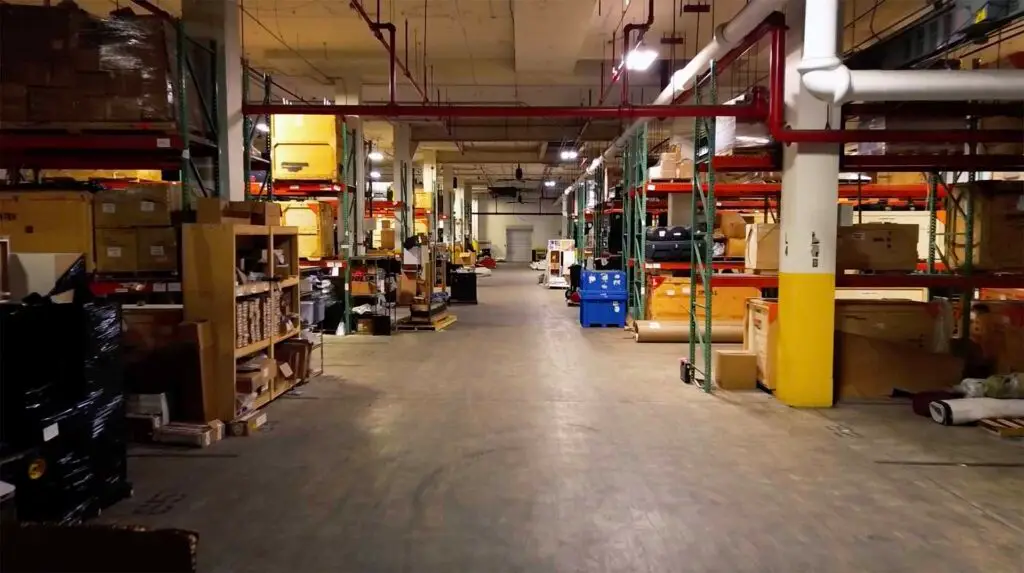
A strong system requires the right infrastructure behind it. A major part of effective trade show asset management is having a warehouse that supports more than just storage. It needs to actively support your program.
With more than 80,000 square feet of storage, staging, and production space, Exhibit Studios provides an environment built specifically for trade show programs. This space is used for:
- Organized storage of exhibit components and graphics
- Pre-show staging where full booths are assembled before shipping
- Client walkthroughs that let teams review layouts and make adjustments
- Faster turnaround between events through centralized preparation
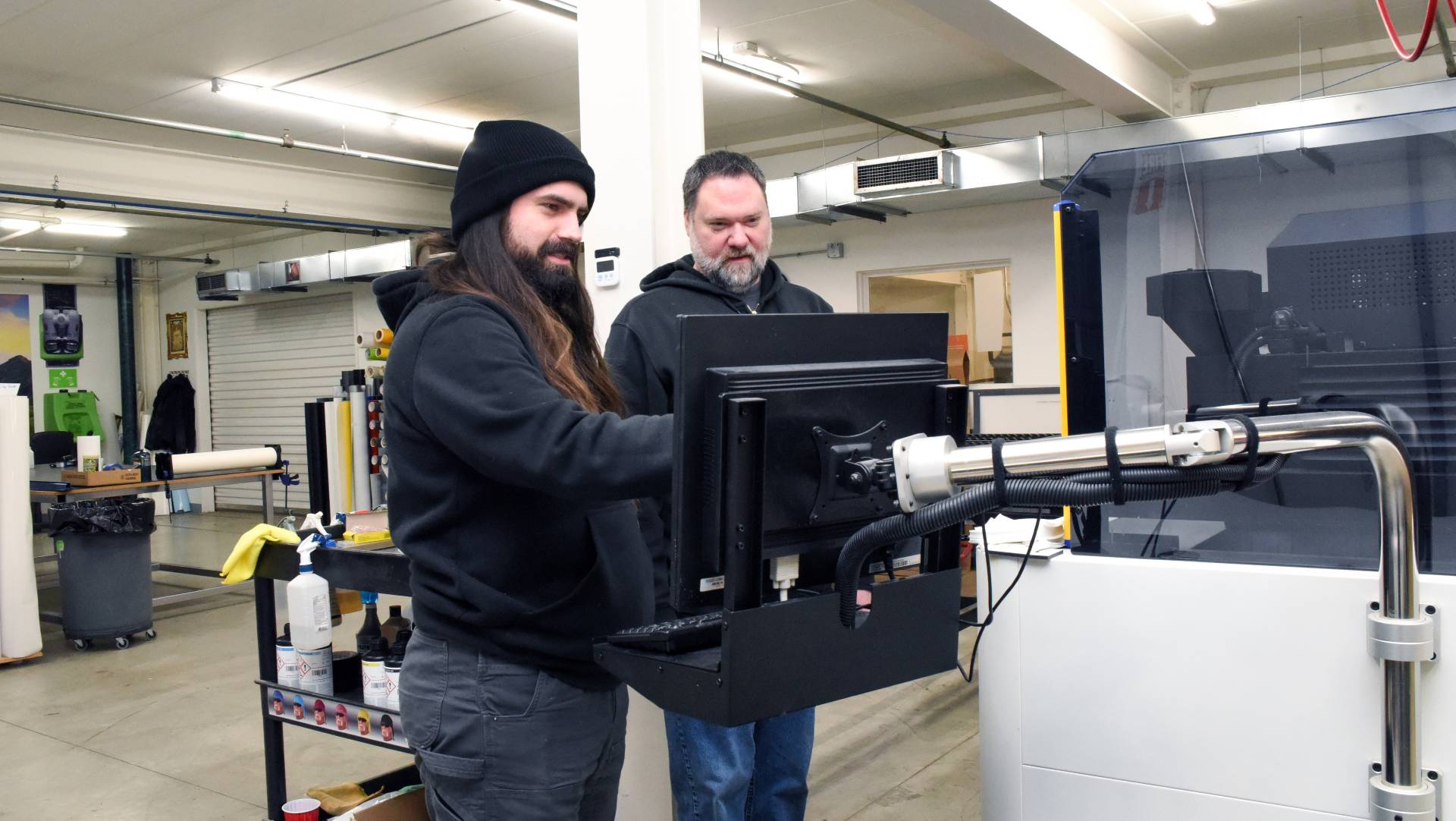
- Expanded fabrication and customization capabilities
The ability to physically walk through your booth before it ships is especially valuable. It gives teams a chance to catch issues early, confirm branding placement, and make adjustments while changes are still simple and cost-effective.
That alone reduces risk and builds confidence before the exhibit ever reaches the show floor.
Inventory Visibility That Actually Helps Teams Work Better
One of the most common pain points in trade show programs is simple: teams don’t have a clear, up-to-date view of what assets exist or where they are. That leads to duplicate orders for items already in storage, forgotten assets that never get reused, delays caused by uncertainty, and inefficient planning cycles.
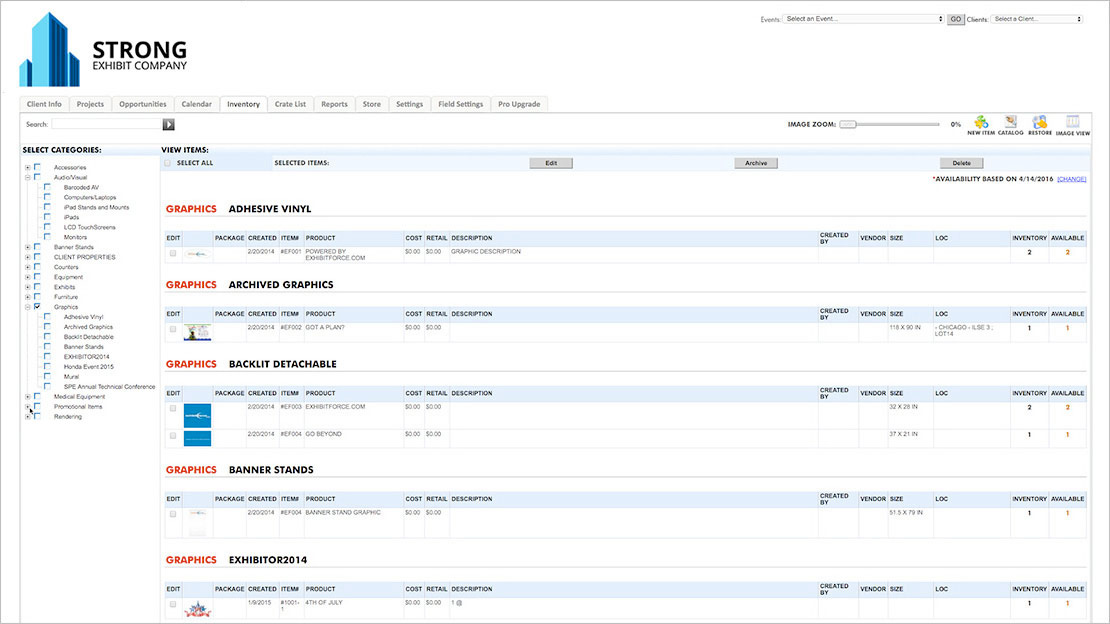
Exhibit Studios solves this through Exhibitforce, a centralized inventory management system built specifically for trade show programs. Through Exhibitforce, users can:
- View a complete digital catalog of all assets
- Access images, descriptions, and product details
- Track location across storage, transit, and show sites
- Request items or plan shipments
- Monitor movement and return status in real time
For marketing and event teams, this is more than a tracking tool. It becomes a decision-making system. Instead of guessing what to ship or reorder, you’re working with actual, real-time data.
Scaling Trade Show Programs Without Losing Control
As companies grow, their trade show programs often expand faster than internal systems can keep up. What starts as a few annual events can quickly turn into multiple booths across regions, overlapping show schedules, different configurations for different audiences, and an increased pressure to perform. Without structured trade show asset management, things can get messy quickly. With it, scaling becomes much more manageable. Teams can:
- Reuse modular components across booth sizes
- Assign assets based on show priority
- Coordinate shipping and setup from one system
- Maintain consistency across all events
Instead of rebuilding everything each time, companies operate from a centralized, organized asset base.
The most overlooked benefit of well-managed interactive trade show display rentals is what comes with it. Experienced installation crews, logistics coordination, on-site supervision, and dismantle management are not add-ons. They are built into the program. When your exhibit partner has managed the full process from design through installation, you arrive for your final walkthrough, not to troubleshoot a setup.
The Real Cost Benefits Most Teams Miss
While trade shows are often budgeted per event, the real cost impact comes from how assets are managed over time. Without proper systems, companies run into:
- Unnecessary reprints of existing graphics
- Replacement of misplaced or untracked components
- Rush shipping fees due to last-minute planning
- Shortened lifespan of reusable materials
With structured exhibit asset management in place, those costs start to drop in a meaningful way. Assets last longer because they are properly maintained, duplicate production is reduced, and last-minute rush orders become far less common. At the same time, teams gain a clearer understanding of what they have and what they need, which makes planning future shows more accurate.
Over time, this leads to more predictable budgets and frees up resources that can be redirected toward higher-impact marketing efforts instead of avoidable operational expenses.
Why Exhibit Studios’ Approach Works for Marketing and Events Teams
Exhibit Studios integrates exhibit asset management directly into its logistics, storage, and production ecosystem.
That means clients are not juggling multiple disconnected vendors or systems. Instead, everything runs through one coordinated process that includes:
- Integrated storage, logistics, and inventory management
- Exhibitforce for real-time visibility and control
- 80,000+ square feet of warehouse and staging space
- Pre-show walkthroughs for validation and refinement
- Custom crating and structured handling systems
This setup reduces friction, improves accuracy, and gives marketing teams more time to focus on strategy instead of logistics issues.
From Storage to Strategic Control
The biggest shift in trade show asset management is not operational. It is strategic. When your exhibit is managed as an asset instead of a project, planning becomes more predictable, costs are easier to control, and execution is more consistent. Teams gain clarity instead of relying on guesswork, creating a stronger foundation for every show. Instead of reacting to each event, you are building a system that improves over time. That is the real value of exhibit asset management.
If your team is looking to reduce waste, improve visibility, and get more value from your exhibit program, Exhibit Studios can help. Connect with us to streamline your asset management and make every show more efficient and cost-effective.
Frequently Asked Questions
What is trade show asset management?
Trade show asset management is the process of tracking, storing, maintaining, and optimizing all components of a trade show exhibit throughout its lifecycle. It ensures every asset is accounted for, usable, and ready for deployment.
Why is trade show asset management important?
It reduces unnecessary costs, prevents lost or damaged materials, improves planning efficiency, and extends the lifespan of exhibit components. It also helps marketing teams gain visibility and control over their exhibit inventory.
How is asset management different from exhibit storage?
Storage is only one part of the process. Asset management includes storage, but also inventory tracking, maintenance, condition monitoring, and deployment planning. It focuses on the full lifecycle of exhibit materials, not just where they are kept.
How does inventory management improve trade show performance?
Inventory management helps teams know exactly what they own, where it is located, and what condition it is in. This reduces duplicate purchases, speeds up planning, and ensures the right materials are used for each event.
What happens to exhibit materials between trade shows?
Between shows, materials should be inspected, cleaned, repaired if needed, documented, and properly repacked. This process ensures assets remain in good condition and ready for the next deployment.
How does Exhibitforce support asset management?
Exhibitforce provides a centralized system where users can view inventory, track asset location, access images and details, and monitor shipment and return status. It gives marketing teams real-time visibility into their exhibit assets.
Can good asset management reduce trade show costs?
Yes. Proper asset management reduces costs by extending the life of exhibit components, preventing duplicate purchases, minimizing rush shipping, and improving planning accuracy across multiple events.