


If your next trade show is six months away, it might feel like you have plenty of time. Most exhibitors feel that way until they do not. The trade show planning timeline moves faster than it looks on a calendar, and the teams that show up strongest are the ones who started early, asked the right questions at every phase, and avoided the last-minute scramble that leaves so much performance on the table.
This guide breaks the planning process into four phases and lays out the key questions your team should be asking at each one. Whether you are building a new trade show display exhibit from scratch or refreshing something you have used before, the questions you ask early determine the quality of what ends up on the floor.
Phase 1: Strategic Alignment
Before any conversation about trade show booth display ideas, booth size, or graphics, the most important work is internal. This is where teams align on why they are exhibiting and what they are trying to accomplish.
The questions to consider in this phase:
- Why are we exhibiting at this show, and what does success look like?
- Who is our target audience on the floor, and how will we reach them?
- How does this event fit into our broader marketing and sales strategy for the year?
- Are we building a new exhibit, refreshing an existing one, or renting?
- What is our realistic budget range, including design, fabrication, logistics, and on-site costs?
- Who internally owns this program and has final decision-making authority?
Teams that skip this phase tend to revisit these questions later, under deadline pressure, when the answers cost more to implement. Getting aligned here means every downstream decision is faster and better informed.
This is also when show selection deserves honest evaluation. Not every event carries the same strategic weight. Early clarity on which shows are worth prioritizing prevents overcommitting resources and helps calibrate the investment each event deserves.
Phase 2: Design and Creative Development
Once strategic alignment is in place, the design phase can begin in earnest. This is where trade show booth display ideas take shape as actual spatial concepts, and where the creative direction for your trade show display exhibit gets established.
Custom exhibit fabrication requires 10 to 14 weeks from approved design to installation-ready. That window starts here, which is why engaging your exhibit partner at this phase rather than at the end of it matters significantly.
The questions to consider in this phase:
- What is the booth configuration and footprint, and what are the venue-specific requirements?
- What brand message do we want the exhibit to lead with, and what should attendees understand within the first few seconds?
- What trade show booth display ideas are we exploring: open floor plan, enclosed meeting space, product demonstration areas, interactive elements?
- What materials, finishes, and graphic approaches align with our brand standards and budget?
- What technology or AV elements need to be integrated, and are they being planned alongside the structure or bolted on afterward?
- Are there graphics from prior shows we can refresh, or are we starting from a clean slate?
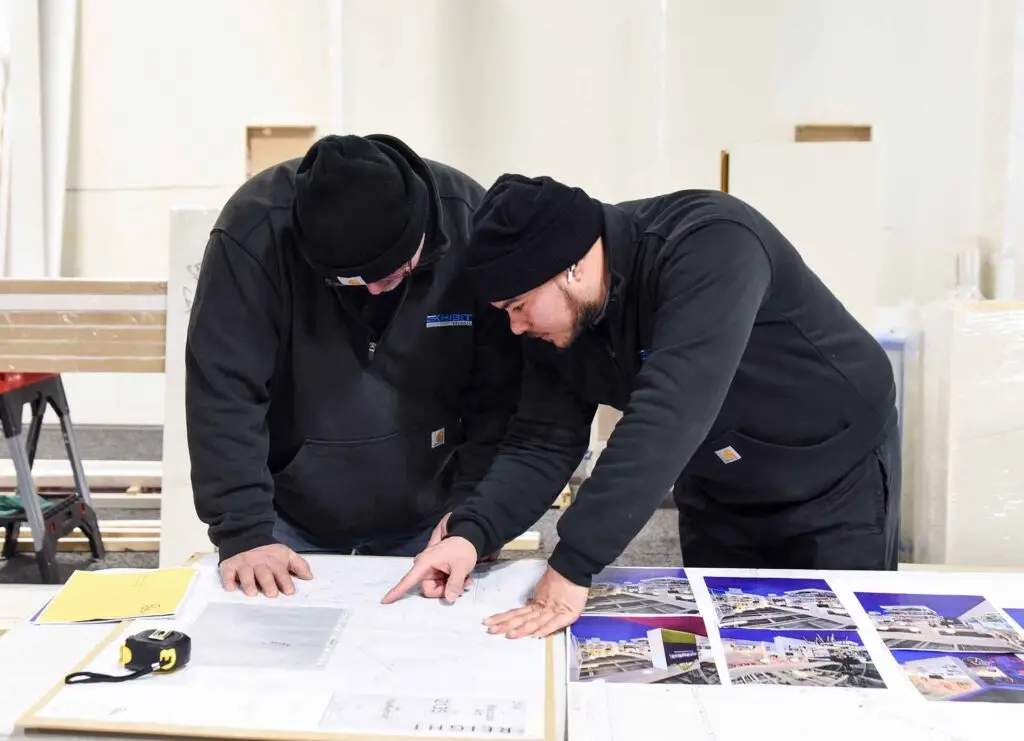
This phase is where the exhibit begins to take shape as a working environment, not just a visual concept. 3D renderings, floor plan layouts, and material selections all live here. The more clearly your team can articulate goals and constraints upfront, the more efficiently the design process moves toward something worth building.
Phase 3: Production and Logistics
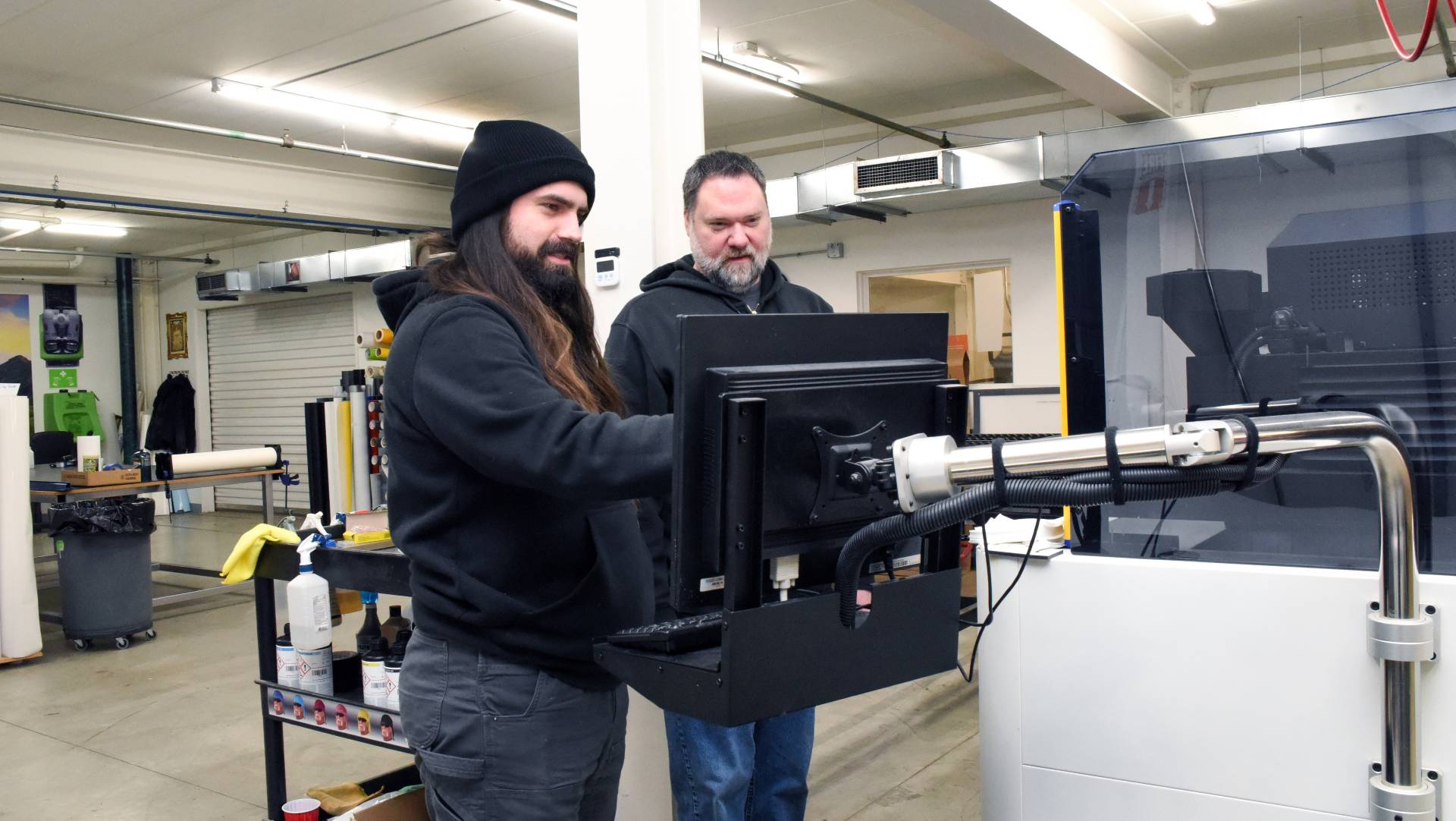
With design approved, fabrication begins across multiple coordinated teams: woodshop and structural fabrication, large-format graphics production, and technology integration. This phase also includes logistics planning, which is not an afterthought. It is a core part of whether the exhibit arrives intact and on time.
The questions to consider in this phase:
- Is the exhibit scheduled for pre-assembly in the shop before it ships?
- Has lighting been tested alongside graphics, or are they being evaluated separately?
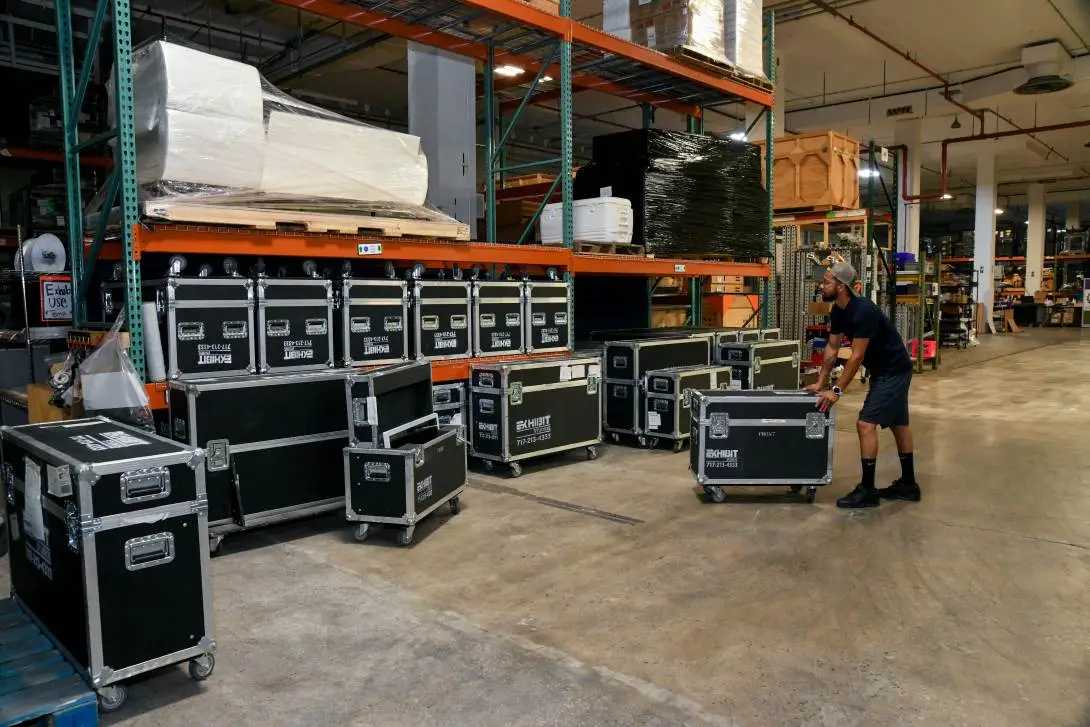
- What is the shipping method, and are we using an advance warehouse or direct-to-show delivery?
- Do we have confirmed utility locations, ceiling heights, and neighboring booth information for the venue?
- Who is the on-site contact at our organization during move-in hours?
- Are graphic files at the correct resolution and submitted on schedule to avoid production delays?
Pre-assembly is one of the most valuable steps in the fabrication process and one of the most frequently skipped by teams working against compressed timelines. Building the full exhibit in the shop before it ships catches fit and finish issues, confirms graphic alignment, and gives the installation crew hands-on experience with the structure before they are standing on a show floor at 6 a.m.
Phase 4: Installation and Show-Floor Execution
The installation phase is where every prior decision is tested. A well-managed installation requires the same preparation and sequencing discipline as the phases that came before it. Show floors are high-pressure environments with fixed move-in windows, union labor jurisdictions, and dozens of competing demands on the schedule.
The questions to consider in this phase:
- Is a trained site supervisor managing the build from the first piece off the truck through the final client walkthrough?
- Does the installation crew know the exhibit, having reviewed drawings and participated in pre-assembly?
- Has dismantle been planned with the same discipline as install, including crating sequence and outbound freight coordination?
- Is there a communication plan in place so a decision-maker at your organization is reachable during move-in hours?
- After the show, where is the exhibit going, and is storage and refurbishment arranged?
The exhibitors who show up consistently strong treat installation as a strategic priority, not a logistical footnote. The same goes for dismantlement. How a show ends directly affects how the next one begins.
Start Trade Show Planning Now
The last-minute trade show scramble is common, but it is avoidable. When planning starts early, teams have room to explore trade show booth display ideas rather than defaulting to whatever can be completed in time. Design is more refined, logistics are coordinated rather than reactive, and the exhibit that shows up on the floor reflects actual goals rather than compressed decisions.
At Exhibit Studios, the earlier we are involved, the more we can do. Whether you have a show locked in or are still evaluating your calendar, now is the right time to start the conversation. Contact Exhibit Studios to schedule your discovery consultation.